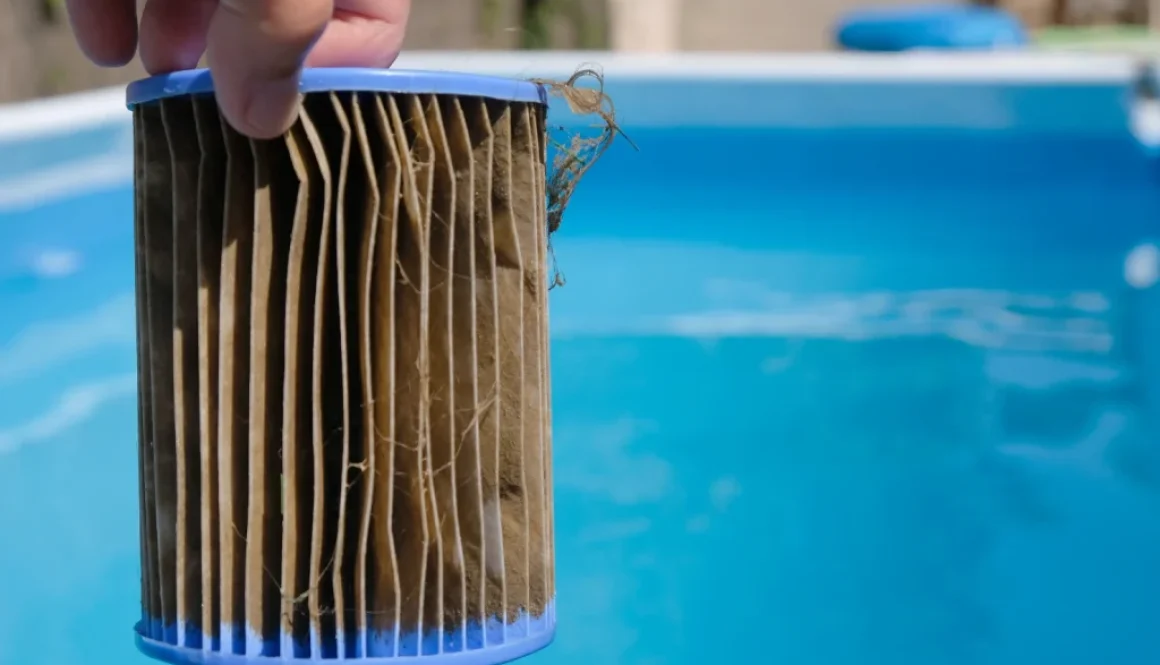
A Damaged Pool Filter Can Quietly Reduce Your Entire System’s Performance
A pool filter does more than trap dirt and debris. It also plays an important role in maintaining steady circulation, supporting water clarity, and helping the rest of your pool equipment operate efficiently.
“What happens when the filter is damaged but still appears to be working?”
Small internal problems, worn components, restricted flow, or cracks can gradually reduce system performance without causing an obvious shutdown.
Recognizing the early signs of filter damage can help homeowners avoid recurring cloudy water, weak return flow, rising pressure, and unnecessary strain on the circulation system.
Key Takeaways
- Damaged filters can quietly reduce circulation.
- Rising pressure often signals filtration restrictions.
- Weak returns may indicate system problems.
- Cleaning cannot repair damaged internal components.
- Timely repairs help restore filtration performance.
The Role Your Pool Filter Plays in the Entire System
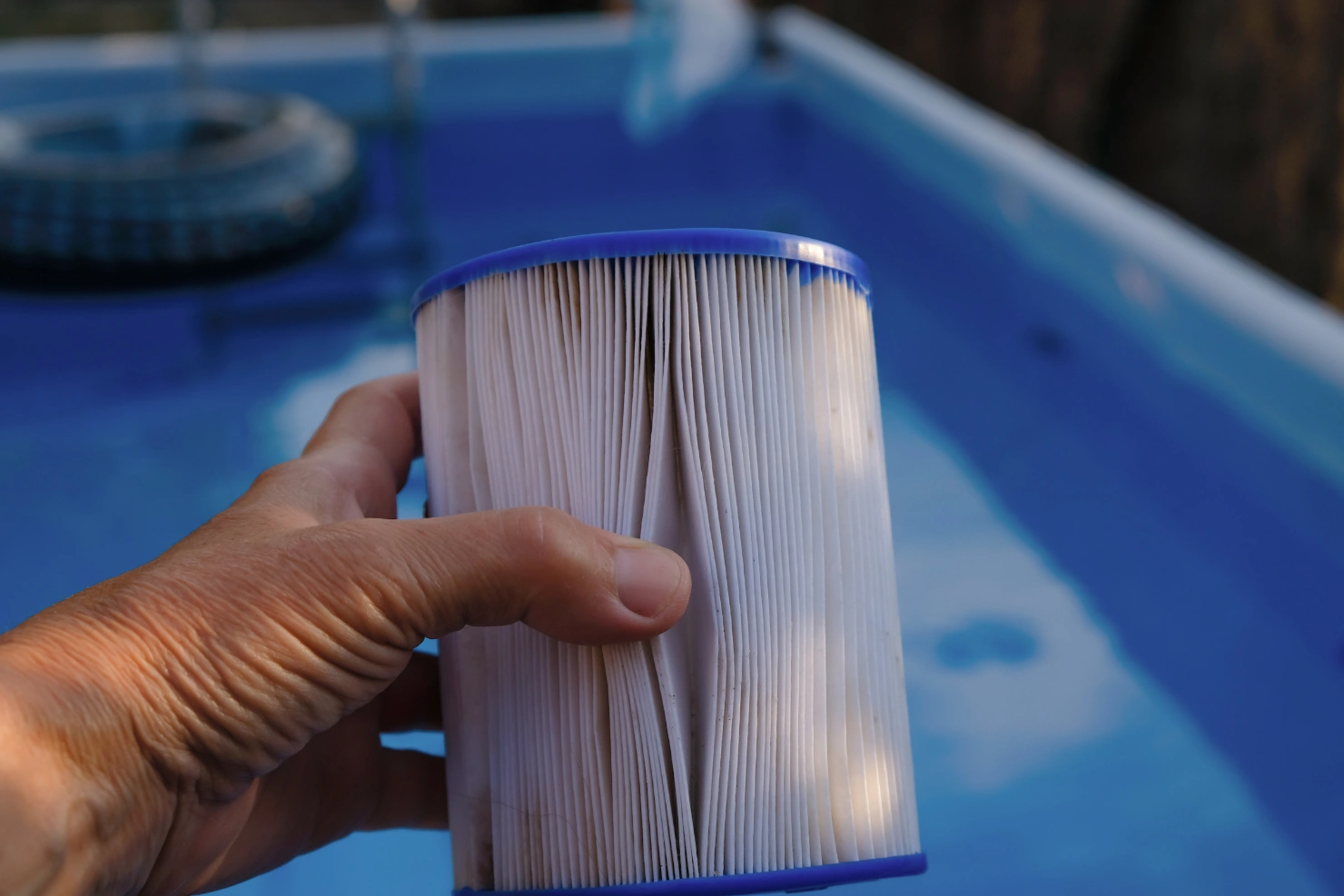
Your pool pump moves water through the filtration system, while the filter captures particles before cleaner water returns to the pool. As debris accumulates inside the filter, resistance to water flow naturally increases.
A properly operating filter therefore affects more than appearance. Consistent filtration and circulation help remove suspended debris and distribute treated water throughout the pool.
Early Signs Your Pool Filter May Be Damaged
Filter problems are not always dramatic. A unit may continue running even though filtration quality or water flow has started declining.
Homeowners should pay attention to changes such as:
- Cloudy water that repeatedly returns after treatment
- Weak flow from the pool’s return jets
- Filter pressure that remains unusually high
- Cleaning or backwashing becoming necessary more frequently
- Dirt or debris entering the pool through returns
- Water leaking around the filter tank or fittings
- Persistent filtration problems immediately after cleaning
These symptoms do not automatically prove the filter itself is damaged. Low water levels, clogged pump baskets, plumbing restrictions, air leaks, improper chemistry, and pump problems can create similar symptoms, which is why proper diagnosis matters.
Filter Damage Can Restrict Water Flow
Water must move through the filter media before returning to the pool. Dirty or damaged components can interfere with that process and increase resistance within the circulation system.
That restriction may first appear as a pressure change, weaker returns, or filtration cycles that become shorter than normal.
Rising Filter Pressure
A pressure gauge helps show the resistance water encounters as it moves through the filter. Pressure normally increases as dirt accumulates, which is one reason filters require cleaning or backwashing.
Persistent high pressure after proper cleaning can point toward other restrictions, including clogged media, partially closed valves, return-line restrictions, or another system issue. Pentair troubleshooting guidance similarly identifies insufficient backwashing, plugged filter media, and return-side restrictions as possible causes of elevated pressure.
Weak Return Flow
Weak flow at the return jets means less water is circulating back into the pool. A dirty or restricted filter can contribute, but it is important to check the entire circulation path.
Pump basket blockages, low pool water, suction-side air leaks, clogged plumbing, and blocked pump components can also reduce flow.
A Struggling Filter Can Affect the Pump
The pump and filter operate as parts of the same circulation loop. Problems in one component can change operating conditions elsewhere in the system.
For example, a heavily restricted filter increases resistance after the pump. Instead of automatically assuming the pump itself is failing, homeowners should look at filter pressure, return flow, valves, baskets, plumbing, and filter condition together.
Running a pool for long periods with unresolved circulation problems is not a good maintenance strategy. Finding the restriction early can prevent continued poor filtration and help the equipment operate under its intended conditions.
Different Filter Types Develop Different Problems
Cartridge, sand, and diatomaceous earth filters all remove contaminants from pool water, but their internal construction differs. That means their failure points can differ as well.
Understanding those differences can make symptoms easier to diagnose.
| Filter Type | Common Problems | Possible Performance Effect |
|---|---|---|
| Cartridge | Torn, damaged, collapsed, or heavily clogged elements | Reduced flow, poor clarity, or debris bypass |
| Sand | Damaged laterals, channeling, clogged media, valve problems | Sand or dirt returning to pool, high pressure, shorter cycles |
| DE | Torn grids, damaged internal components, clogged elements | Poor filtration, reduced flow, or DE returning to pool |
A torn cartridge, for example, may allow particles to bypass the filtering material. Sand filters can send sand back into the pool when internal laterals are damaged.
Dirt Blowing Back Into the Pool Is a Warning Sign
Finding dirt near a return jet shortly after vacuuming or filtering can be frustrating because the system appears to be putting contaminants back where they started.
Filter bypass can occur when water finds a route around damaged filtration components. In cartridge systems, a hole in the filter element or a worn internal seal can allow debris through.
Sand entering the pool during ordinary filtration can indicate broken or misaligned internal components such as laterals or a standpipe. A faulty backwash valve can also contribute to certain sand-filter problems.
Repeated debris blowback deserves inspection rather than another round of vacuuming alone.
Filter Problems Can Make Water Chemistry Harder to Manage
Chemicals and filtration perform different jobs. Sanitizer helps control microorganisms, while the filter physically removes suspended material as water passes through it.
Poor filtration can therefore leave particles suspended even when chemical readings appear acceptable. Cloudiness can also have several causes, including incorrect chemistry, heavy debris loads, inadequate circulation, insufficient filtration time, or filter problems.
Adding more chemicals without identifying the cause can waste product without correcting damaged filter components or poor circulation.
Pro Tip: If your pool repeatedly turns cloudy even though water chemistry is being maintained correctly, check circulation and filtration before repeatedly adding treatment products.
Cleaning Does Not Always Fix a Damaged Pool Filter
Cleaning helps when debris accumulation is the problem. It cannot repair a physically damaged component.
A freshly cleaned system may continue performing poorly when the underlying issue includes:
- Torn cartridge material
- Broken sand-filter laterals
- Damaged DE grids
- Cracked manifolds or internal fittings
- Worn seals or O-rings
- Malfunctioning valves
- Structural filter tank damage
This distinction matters because repeated cleaning can temporarily remove dirt without correcting the component allowing debris to bypass the filter.
A filter that becomes dirty unusually quickly also deserves further investigation. Short filtration cycles can be associated with algae, ineffective cleaning, excessive flow, clogged filter media, or other operating conditions.
When Pool Filter Repair Makes Sense
A complete filter replacement is not necessary every time something goes wrong. Many problems can be corrected by replacing the specific failed component.
Repair may make sense when the filter tank remains sound and the problem is limited to a replaceable cartridge, grid, lateral, seal, pressure gauge, valve component, or another serviceable part.
The decision should consider the filter’s overall condition, availability of compatible parts, recurring repair history, and whether the filter is correctly sized for the pool and pump.
When Pool Filter Replacement May Be Better
At some point, continued repairs become less practical. An older system with repeated failures may justify replacement, particularly when major structural components are deteriorating.
Replacement may deserve consideration when:
- The filter tank is cracked or structurally compromised
- Internal failures repeatedly return
- Replacement components are difficult to obtain
- The existing filter is improperly sized
- Several major components are deteriorating together
- Repairs are becoming increasingly frequent
- Performance remains poor after proper servicing
Pressure vessels must be treated carefully. Pool filter tanks operate under pressure, so cracked or compromised tanks should never be improvised, patched, or opened while pressurized. Follow the manufacturer’s safety instructions and shut the pump off before servicing the equipment.
Do Not Ignore Gradual Changes in Pool Performance
Filter damage often develops slowly. Your pool may not suddenly stop circulating or turn completely cloudy overnight.
Instead, you may notice that the filter needs attention more often, the pressure gauge steadily behaves differently, the returns feel weaker, or the water takes longer to clear.
Tracking these changes makes troubleshooting easier. Knowing the pressure reading immediately after a proper filter cleaning provides a useful baseline for comparison because normal operating pressure varies between individual pool systems.
Manufacturer instructions commonly recommend noting clean-filter pressure after servicing so later increases can be evaluated against that starting point.
Restore Reliable Filtration Before Problems Spread
A damaged filter can continue running while quietly reducing filtration and circulation quality. That makes early diagnosis especially valuable.
Check persistent pressure changes, cloudy water, weak return flow, recurring debris, and unusually frequent cleaning rather than assuming these problems are normal. Finding the actual cause allows you to decide whether cleaning, component repair, or filter replacement is the appropriate solution.