Adding More Chlorine May Not Fix a Pool That Keeps Turning Green
A pool that keeps turning green can be frustrating, especially when adding more chlorine seems like the obvious solution. Chlorine can kill many types of algae, but recurring green water often means there is another problem affecting the pool.
“What if the real issue is poor circulation, an overloaded filter, unbalanced water chemistry, or algae hiding in areas that routine cleaning misses?”
Simply adding more chlorine may provide temporary improvement without correcting the condition that allowed algae to grow in the first place.
Finding the source of the problem helps homeowners avoid wasting chemicals and repeating the same treatment. Proper testing, filtration, brushing, circulation, and targeted algae removal can help restore clear water and reduce the chance of another green pool.
Key Takeaways
- Green pools often need more diagnosis.
- Poor circulation can create algae hotspots.
- Water balance directly affects chlorine performance.
- Dirty filters can slow algae removal.
- Brushing helps expose stubborn surface algae.
Why More Chlorine Does Not Always Solve Green Pool Water
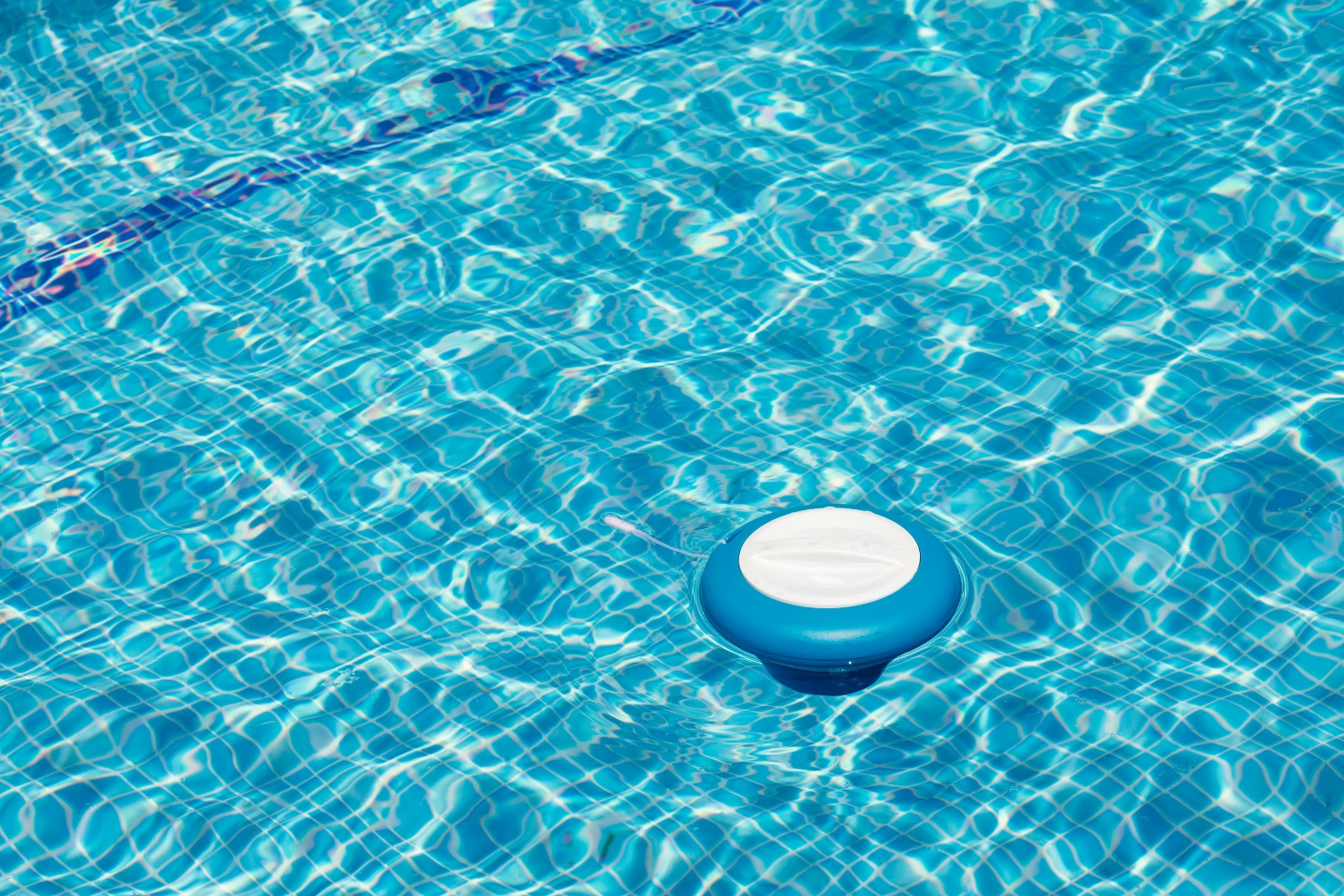
Chlorine is an essential pool sanitizer, but successful algae control depends on more than adding another dose. Water chemistry, filtration, circulation, sunlight, debris, and the amount of algae already present can all affect the results.
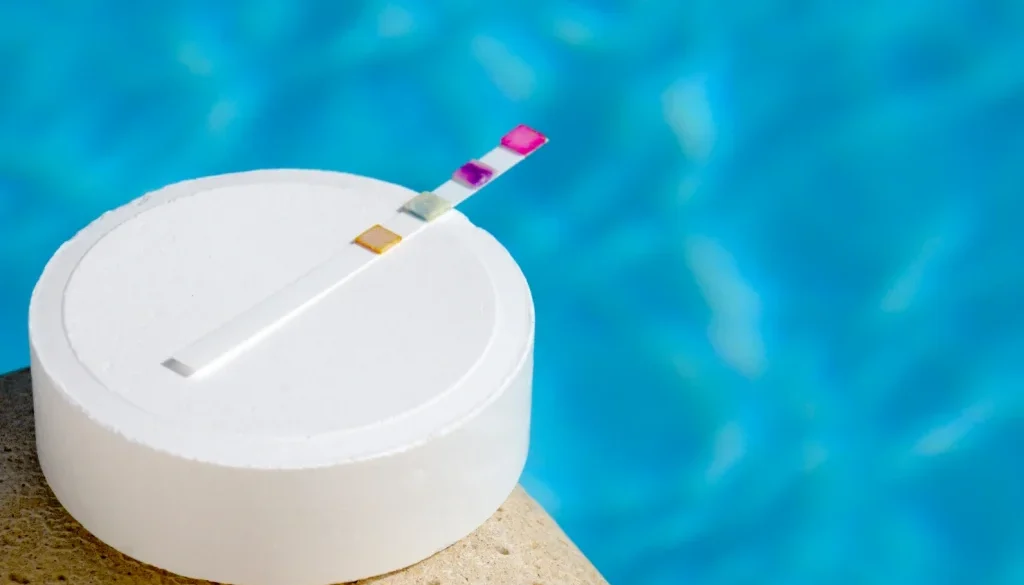
CDC guidance recommends maintaining pool pH between 7.0 and 7.8 because pH influences chlorine performance. The CDC also recommends at least 1 ppm free chlorine in pools, or at least 2 ppm when cyanuric acid is being used.
Chlorine Gets Consumed
Leaves, dirt, swimmer contaminants, and other organic material create additional demand on chlorine. An active algae bloom can also consume sanitizer as treatment progresses.
Sunlight adds another challenge in outdoor pools. Cyanuric acid is commonly used to reduce chlorine loss from ultraviolet light, but it also affects chlorine’s disinfection activity.
Chemistry Changes Performance
If the pH is too high, chlorine becomes less effective as a disinfectant. Simply pouring in more chlorine without correcting the water conditions can lead to repeated treatments and disappointing results.
Testing first provides a clearer picture of what the pool actually needs.
Algae Stays Hidden
Algae does not always grow across an open pool wall where it is easy to see. It can develop behind ladders, around steps, near lights, beneath fittings, and in corners with weaker circulation.
If those areas are not brushed and treated, remaining growth can contribute to another bloom after the main water clears.
Common Reasons a Pool Keeps Turning Green
Recurring green water usually points to a condition that has not been fully corrected. Looking beyond the chlorine reading can uncover the reason algae keeps getting another opportunity to grow.
Common contributors include:
- Inadequate sanitizer levels
- Improper pH
- Poor circulation
- Dirty or overloaded filters
- Excess debris in the water
- Algae in hidden areas
- Incomplete brushing
- Insufficient filtration
- Incorrect use of stabilizer
- Long periods without water testing
Several of these problems can occur at the same time. A pool with low circulation, for example, may also struggle to distribute chemicals evenly and move suspended material toward the filter.
Water Chemistry Can Limit Chlorine Performance
Water testing is one of the most useful steps before treating a green pool. Adding chemicals without knowing existing levels can make it harder to identify what needs correction.
The figures below are meant to show each factor’s role rather than provide a universal chemical prescription. Product labels, pool type, stabilizer use, local conditions, and professional testing should guide treatment decisions.
| Water Factor | What Can Go Wrong | Effect On Pool Conditions |
|---|---|---|
| Free Chlorine | Sanitizer becomes too low or is rapidly consumed | Algae and microorganisms may continue growing |
| pH | High pH reduces chlorine effectiveness | Sanitizing performance can decline |
| Cyanuric Acid | Improper levels change chlorine requirements | Chlorine may require different operating levels |
| Total Alkalinity | Poor control can make pH less stable | Maintaining consistent water balance becomes harder |
The CDC recommends a pH range of 7.0 to 7.8 for treated swimming pools and notes that chlorine requirements differ when cyanuric acid is present.
Chemical targets should not be treated as independent numbers. Each part of the water balance can affect the overall condition of the pool.
Poor Circulation Creates Algae Hotspots
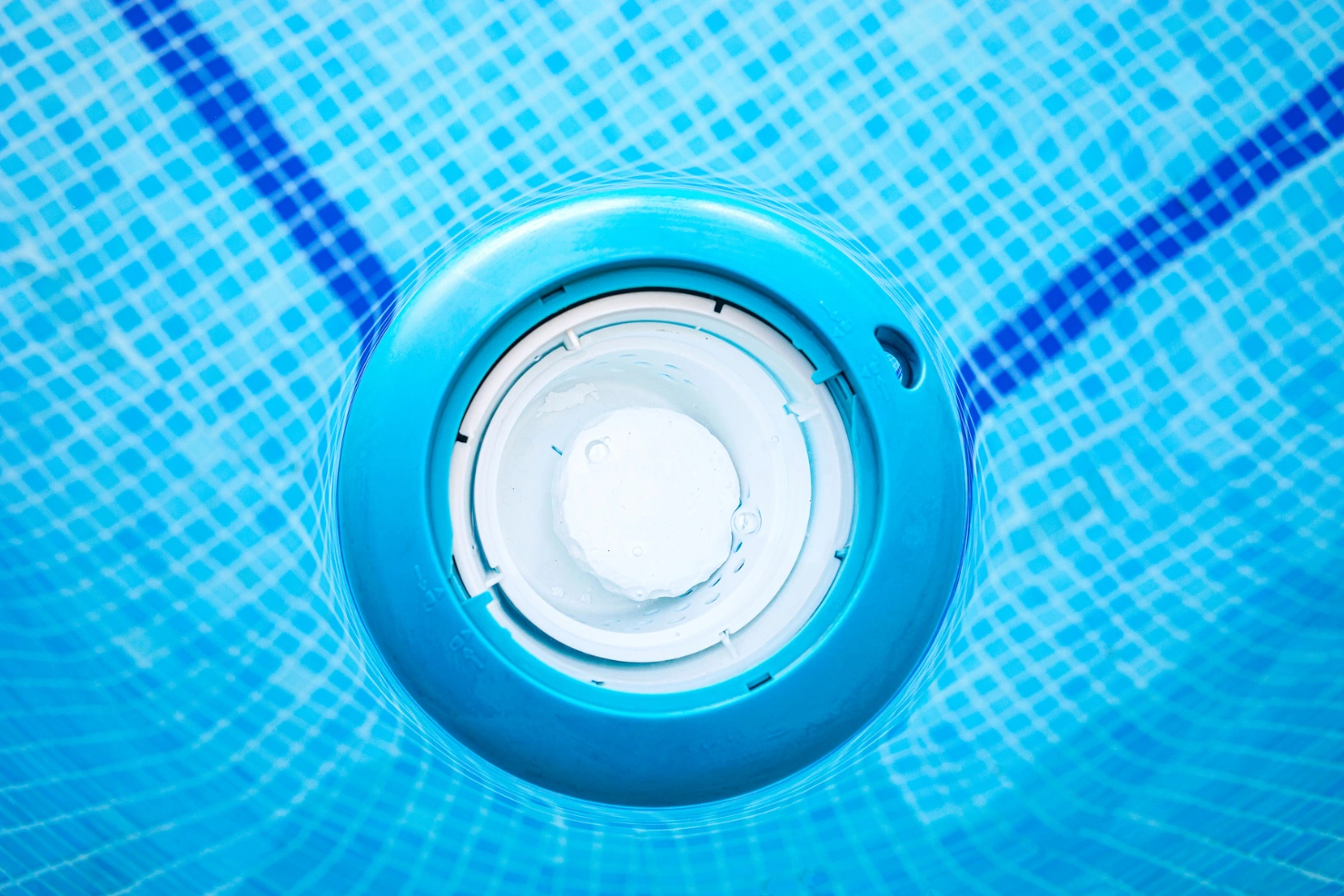
Pool water needs to move through the circulation and filtration system so sanitizer can be distributed and suspended material can reach the filter. Weak-flow areas can become recurring trouble spots.
Checking where algae repeatedly appears can provide useful clues about circulation problems.
Steps And Corners
Steps, benches, corners, and similar features can receive less water movement than open sections of the pool.
These areas deserve extra attention during brushing and inspection, especially if discoloration keeps appearing in the same location.
Ladders And Fittings
Ladders, removable accessories, light niches, and fittings create small protected areas where routine brushing may not reach.
Visible surfaces may look clean while growth remains along edges or behind fixtures.
Return Jet Direction
Return jets help move treated water throughout the pool. Poorly directed returns or weak flow may leave sections with less circulation.
Changing jet direction alone will not correct every algae problem, but evaluating flow patterns can be an important part of diagnosing recurring growth.
Your Filter May Be Part Of The Problem
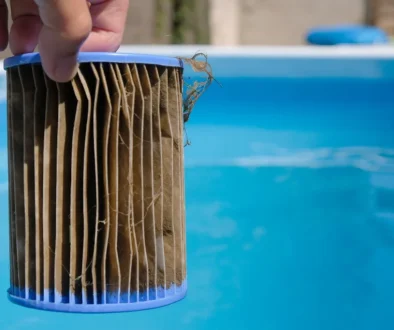
Chemical treatment kills or weakens algae, but the filtration system helps remove suspended material from the water. A filter that is dirty, restricted, or operating poorly can slow the cleanup.
Homeowners should watch for changes in filtration performance during algae treatment.
Potential warning signs include:
- Noticeably weaker return flow
- Filter pressure that differs significantly from the system’s normal clean reading
- Rapid pressure increases after cleaning
- Water that remains cloudy despite treatment
- Debris returning to the pool
- A filter overdue for appropriate cleaning or maintenance
Different filter types have different cleaning requirements. Cartridge, sand, and diatomaceous earth filters should be maintained according to their design and manufacturer instructions rather than treated exactly the same way.
Brushing Is An Important Part Of Algae Removal
Algae attached to pool surfaces can be harder to reach through water treatment alone. Physical brushing helps loosen growth and exposes more of the affected surface to sanitizer.
Brushing should include areas that are easy to overlook, not just the most visibly green wall.
Focus on:
- Pool walls
- Steps and benches
- Corners
- Around drains
- Behind ladders
- Around fittings
- Areas with recurring discoloration
EPA-registered pool treatment labels have long included surface scrubbing or brushing as part of algae-treatment directions for certain products. Always follow the specific instructions for chemicals being used.
Pro Tip: Do not judge algae treatment only by the color of the water. Continue checking chemistry, brushing problem areas, and monitoring filtration as the pool clears.
Green Water Is Not Always Active Algae
A green or discolored pool does not automatically prove that living algae is responsible. Metals, fine debris, pollen, and dead algae can sometimes change the appearance of the water.
Identifying the source before adding more chemicals helps prevent unnecessary treatment.
Metals In Water
Metals such as iron or copper can contribute to unusual water coloration or surface staining under certain chemical conditions.
This type of discoloration requires a different approach from a typical algae bloom, so confirming the cause is important before repeatedly adding chlorine.
Dead Algae Remains
After algae is killed, microscopic material can remain suspended in the water. This often creates dull or cloudy conditions even though active growth has been reduced.
Adequate filtration and filter maintenance are important during this stage.
Pollen And Debris
Fine organic material can settle on surfaces or collect in low-flow areas. At first glance, it may resemble algae.
Testing, brushing, and observing how the material behaves can help distinguish one problem from another.
Signs Repeated Chlorine Treatments Are Not Solving The Problem
A single algae bloom after neglected maintenance or severe weather is different from a pool that repeatedly turns green despite treatment. Frequent recurrence deserves closer investigation.
Watch for these signs:
- Green water returns soon after clearing
- Chlorine readings repeatedly fall quickly
- The same walls or corners keep turning green
- Water remains cloudy after algae treatment
- Return flow seems weaker than normal
- The filter becomes dirty unusually quickly
- Brushing removes discoloration that soon returns
- Adding sanitizer produces only temporary improvement
Repeatedly treating the symptoms can use more chemicals without delivering lasting results.
What Professional Algae Removal Looks At
Professional algae removal starts by determining what is happening in the pool instead of assuming every green pool needs the same chemical dose. Water conditions, equipment, surfaces, and circulation all provide clues.
A systematic inspection can separate a straightforward algae problem from staining, water imbalance, or filtration trouble.
Water Chemistry Testing
Testing can evaluate sanitizer, pH, alkalinity, stabilizer, and other factors relevant to the pool.
The results guide treatment instead of relying on appearance alone.
Circulation Performance
The pump, returns, skimmers, and overall water movement should support effective filtration and chemical distribution.
Low-flow sections may require extra cleaning attention.
Surface Condition
Green, yellow, brown, or dark discoloration can have different causes. Examining where it occurs and how it reacts to brushing helps determine the next step.
Filter Condition
Filters collect large amounts of suspended material during algae cleanup. Cleaning or servicing them at the correct time helps maintain flow and removal efficiency.
Preventing Another Green Pool
Once the pool is clear, consistent maintenance is easier than recovering from another major algae bloom. Small problems are also easier to correct before the water changes color.
Homeowners can reduce the risk of recurring algae by:
- Testing pool water regularly
- Maintaining appropriate sanitizer levels
- Keeping pH properly controlled
- Removing leaves and organic debris
- Brushing walls, steps, and corners
- Cleaning filters as required
- Watching for reduced circulation
- Inspecting hidden and low-flow areas
- Correcting chemistry problems before they become severe
The goal is consistency. Large swings between neglected and heavily treated water make pool management more difficult.
Stop Treating The Symptom Instead Of The Cause
Adding more chlorine can be appropriate in some algae treatments, but it should not replace diagnosis. If a pool repeatedly turns green, chemistry, circulation, filtration, debris, hidden growth, or staining may also need attention.
HQ Pool Services can identify the source of recurring green water and use a controlled treatment plan to restore the pool. Correcting the underlying condition can reduce wasted chemicals, repeated cleanup, and the frustration of seeing green water return.