A Poorly Fitted Pool Safety Cover Can Leave Dangerous Gaps
A pool safety cover is supposed to create a secure barrier across the entire pool, but that protection depends heavily on proper fit and tension. Even a high-quality cover can become less effective when it is too loose, incorrectly measured, or installed with poorly positioned anchors.
“What happens when gaps begin forming around steps, raised walls, corners, or the pool perimeter?”
Those openings can allow debris underneath, reduce the cover’s stability, and create potential safety concerns for children and pets. Understanding what causes poor fit can help homeowners correct problems before winter weather makes them worse.
Key Takeaways
- Proper cover fit maintains reliable protection.
- Dangerous gaps can reduce safety performance.
- Uneven tension often signals installation problems.
- Worn components may require cover replacement.
- Seasonal inspections help catch fitting issues.
What A Properly Fitted Safety Cover Should Look Like
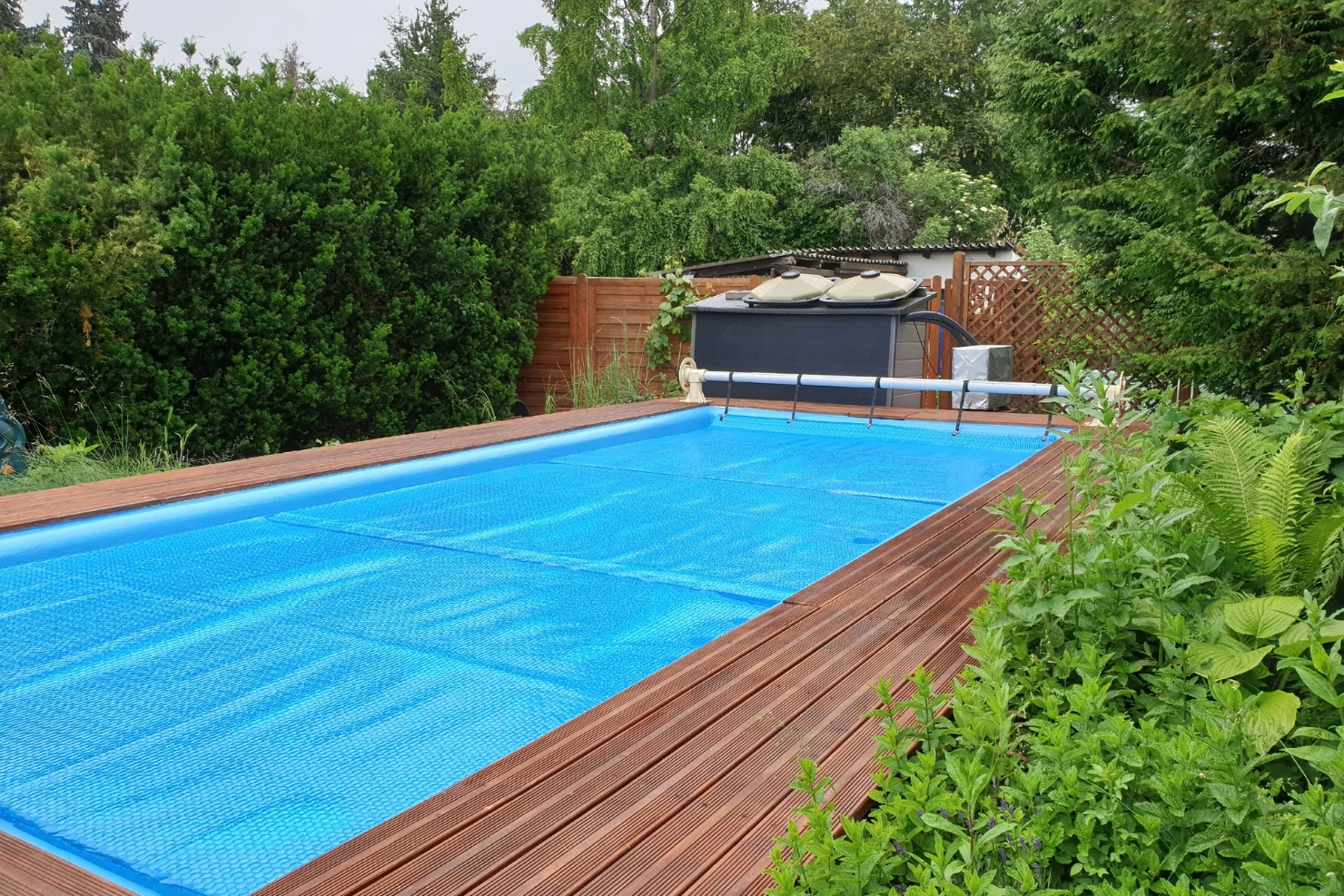
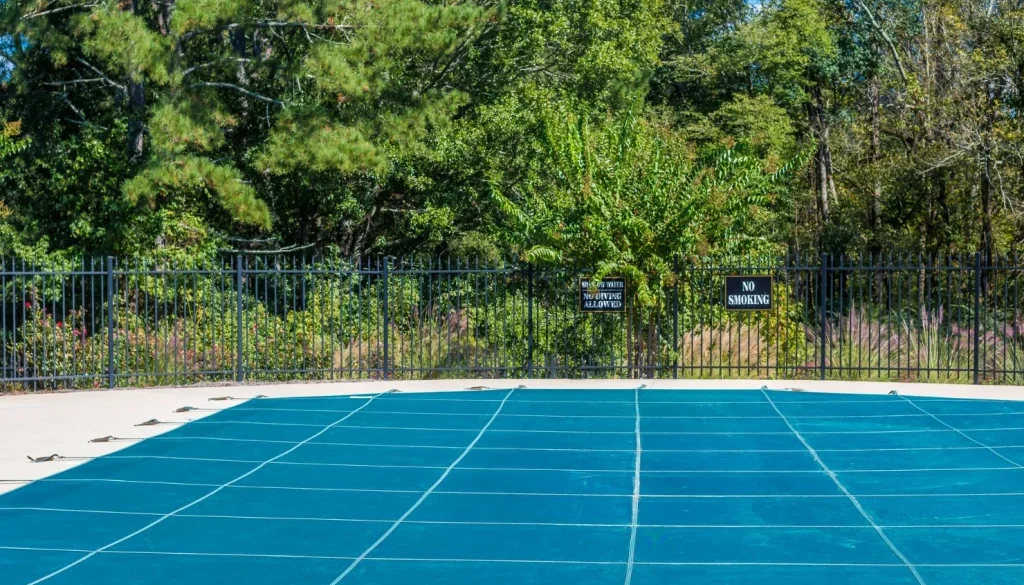
A safety cover should sit taut and evenly positioned across the pool without excessive sagging, large perimeter openings, or sections pulling noticeably toward one side. Straps, springs, anchors, and the cover material work together to maintain this tension.
ASTM F1346 establishes performance requirements for swimming pool safety covers. When a compliant cover is correctly installed and used according to manufacturer instructions, it is intended to reduce drowning risk by restricting young children’s access to the water.
Correct installation is therefore just as important as buying a safety-rated product. A cover that was made for the wrong dimensions or installed incorrectly may not perform as its manufacturer intended.
Common Signs Your Pool Safety Cover Does Not Fit Correctly
Poor fit is often visible before a cover develops major damage. Checking the cover soon after installation and throughout the off-season can help homeowners identify changes early.
Watch for these common warning signs:
- Large or increasing gaps around the pool perimeter
- Excessive sagging across sections of the pool
- One side of the cover appearing tighter than another
- Straps that feel unusually loose
- Springs with noticeably inconsistent tension
- Fabric pulling heavily toward one group of anchors
- Openings near steps, corners, spas, or raised walls
- Anchors that no longer align naturally with the straps
- Areas where the cover rubs aggressively against coping or deck edges
Some movement is expected as weather conditions change, but obvious distortion or worsening gaps deserve attention.
What Causes Gaps Around A Pool Safety Cover
Safety cover fit depends on accurate measurements, appropriate cover construction, correct hardware placement, and continued tension. Problems with any of these elements can create openings.
Incorrect Pool Measurements
Safety covers are commonly manufactured to match the dimensions and features of a specific pool. This is especially important for pools with curves, steps, attached spas, raised walls, or other nonstandard features.
If measurements do not accurately represent the pool, straps and reinforced areas may not align correctly with the intended anchor locations. Trying to compensate by overtightening certain straps can make tension uneven elsewhere.
Poor Anchor Placement
Deck anchors provide the fixed points used to tension the cover. Their locations should follow the cover manufacturer’s installation requirements and account for the surrounding deck.
Poorly positioned anchors can pull the cover in the wrong direction. This may create tight areas on one side while leaving unwanted openings on another.
Aging Cover Components
Safety covers do not remain unchanged forever. Straps, stitching, springs, webbing, and cover material can experience wear from repeated seasonal use and exposure to outdoor conditions.
Worn components can make it increasingly difficult to maintain consistent tension even when the cover originally fit correctly.
Changes Around The Pool
Deck replacement, coping repairs, remodeling, new water features, or modifications to steps and surrounding structures can affect an existing cover.
A cover built for the pool’s previous configuration may need adjustment, new hardware, modification, or replacement after substantial changes.
Where Dangerous Gaps Commonly Develop
Not every pool is a simple rectangle. Detailed features can make accurate measurement and cover construction especially important.
Homeowners should pay extra attention around:
- Entry steps and swim-outs
- Rounded or angled corners
- Attached spas
- Raised walls
- Water features
- Rock features
- Irregular deck edges
- Areas where the pool changes direction
A custom safety cover can account for these features during manufacturing. LOOP-LOC, for example, describes custom fitting as part of its safety-cover design process for pools with different shapes and sizes.
Why Safety Cover Gaps Can Become A Serious Problem
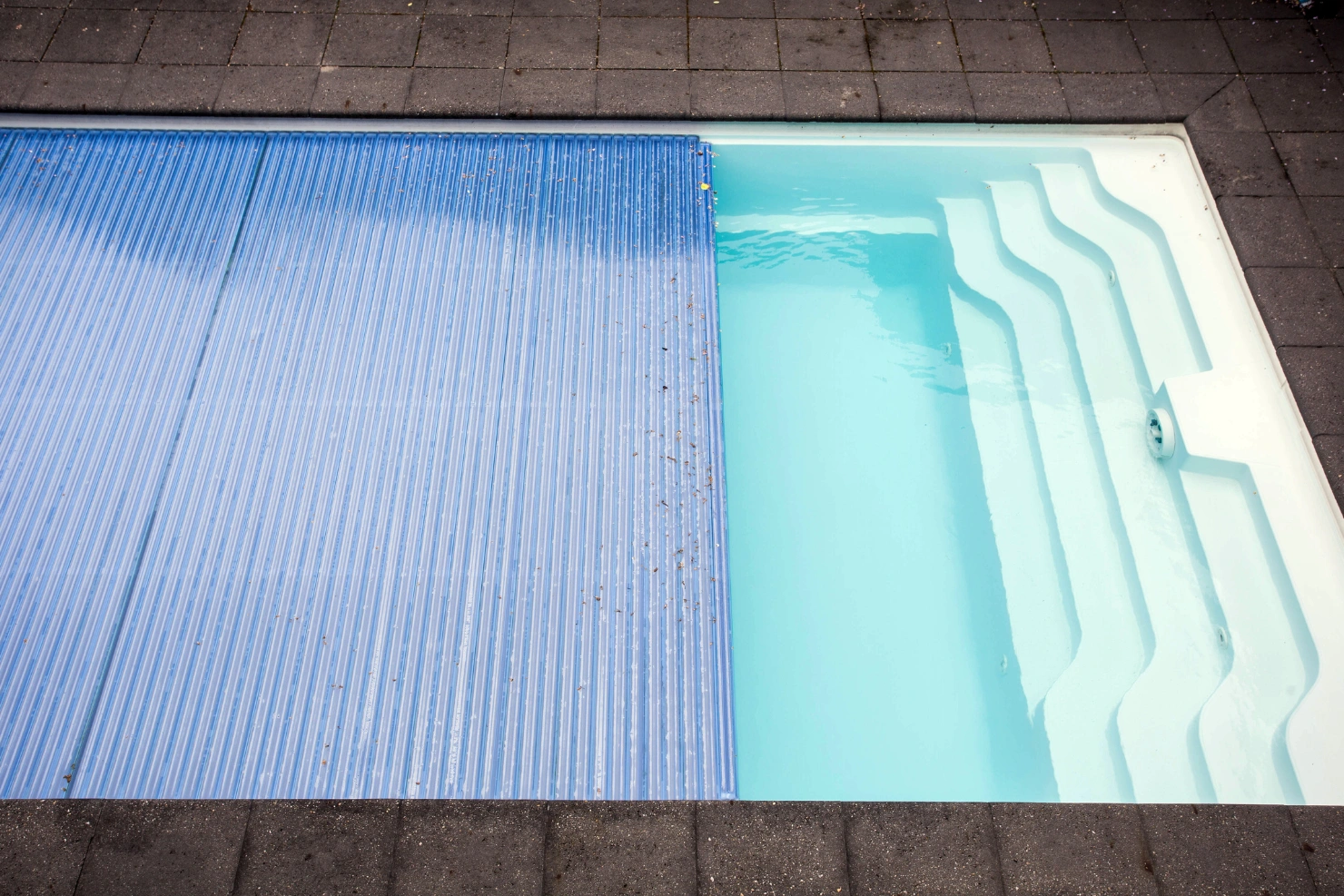
A visible opening is more than a cosmetic issue. Depending on its location and severity, poor fit can affect safety, cleanliness, cover wear, and spring pool preparation.
Reduced Safety Protection
The primary purpose of a safety cover is to restrict access to the pool while it is closed. A large opening around the perimeter can undermine that barrier, especially near areas that are accessible from the deck.
A safety cover should never be treated as permission to leave children or pets unsupervised around a pool. Proper barriers, supervision, and other required safety precautions remain important.
Debris Gets Underneath
Leaves, twigs, dirt, and other organic material can enter through gaps. Once underneath, debris may settle into the water and begin decomposing.
This can leave homeowners with more cleanup when the pool opens.
More Algae Potential
Sunlight and organic debris are two factors that can contribute to algae problems. A cover that leaves large exposed sections of water may provide less protection against both.
Pool chemistry, closing procedures, water temperature, and circulation conditions also influence whether algae develops, so cover fit is only one part of winter water care.
Increased Cover Stress
Uneven tension can concentrate forces in certain parts of the cover rather than distributing them as intended.
Over time, that can contribute to wear around straps, stitching, springs, anchor points, or areas where the cover contacts hard pool surfaces.
Proper Fit Versus Poor Fit
Certain visual differences can help homeowners decide whether their cover deserves a closer inspection.
| Cover Area | Proper Fit | Potential Poor-Fit Sign |
|---|---|---|
| Perimeter | Consistent coverage | Large or uneven openings |
| Surface | Taut and evenly supported | Excessive sagging |
| Straps | Consistent tension | Loose or overly tight sections |
| Springs | Similar working tension | Noticeably uneven compression |
| Position | Centered over pool | Pulled toward one side |
| Special features | Closely follows pool design | Large openings near steps or walls |
Manufacturer requirements vary by cover system, so homeowners should use the specific installation and maintenance instructions supplied with their cover.
Can An Existing Safety Cover Be Adjusted?
Not every poorly fitting cover requires immediate replacement. In some situations, adjusting straps or addressing individual hardware problems may restore appropriate tension.
For example, Merlin Industries advises that its safety covers should be taut after installation and notes that straps can be adjusted when the cover is not sufficiently tight. The company’s instructions also specify spring-compression ranges for its particular mesh and solid systems.
Adjustment may be appropriate when the cover itself remains in good condition and the problem comes from minor tension differences. Damaged anchors, worn springs, or other hardware may also be replaceable depending on the system.
Major dimensional problems are different. Tightening straps cannot turn an incorrectly sized cover into a correctly fitted one.
When A Safety Cover Needs Replacement Instead Of Adjustment
A cover should be professionally evaluated when repeated adjustments no longer keep it positioned properly. Significant material or structural wear can also make replacement the better option.
Warning signs may include:
- Torn or badly worn cover material
- Frayed or damaged straps
- Failing stitching or webbing
- Hardware that repeatedly loses proper tension
- Large gaps that cannot be corrected through normal adjustment
- Cover dimensions that no longer match the pool
- Damage caused by changes to the deck or pool structure
Replacing individual hardware components can make sense when the rest of the system remains sound. A cover with widespread deterioration or incorrect dimensions requires a broader solution.
Why Custom Measurement Matters For Irregular Pools
Pools with straightforward shapes are generally easier to measure, but irregular pools require more detailed planning. Steps, curves, raised spas, walls, and other features change where the cover must extend and where its tension needs to be supported.
A professional measurement process records these dimensions before the cover is produced. The goal is to create a cover whose straps and reinforced sections align correctly once anchors are installed.
Pro Tip: Inspect your safety cover from every side before the pool closing is complete. Pay particular attention to steps, corners, attached spas, and raised walls.
Check Your Safety Cover Before Closing The Pool
The best time to discover a fitting problem is before the cover must handle months of leaves, rain, snow, and changing temperatures. An inspection during pool closing gives you time to correct damaged hardware or fit issues before winter.
Walk around the entire pool rather than checking it from one side. Look at the cover material, straps, springs, anchors, stitching, and areas surrounding special pool features.
Avoid walking across the cover simply to inspect it. Manufacturers may specifically discourage walking on safety covers even when the product is capable of supporting substantial loads.
Professional Safety Cover Installation In The DC Metro Area
Correct safety cover installation starts well before the first anchor enters the deck. Pool dimensions, shape, special features, deck material, cover type, and manufacturer requirements all influence the finished installation.
HQ Pool Services installs mesh and solid safety covers for residential pools throughout Maryland, Washington, DC, Northern Virginia, and surrounding DC Metro communities. We measure the pool, source the appropriate cover, position deck hardware, tension the system, and review its operation with the homeowner.
Keep Your Pool Secure Throughout The Off-Season
A safety cover should provide dependable coverage without large openings around the pool. When gaps appear, simply pulling individual straps tighter may not address the underlying problem.
Check the fit before every closing season and pay attention to changes throughout the winter. If your cover is sagging, pulling unevenly, or leaving significant gaps, contact HQ Pool Services for an inspection or safety cover installation in Maryland, Washington, DC, and Northern Virginia.