Aging Pool Plaster Can Make Water Chemistry Harder to Control
Aging pool plaster does more than make a swimming pool look faded or feel rough underfoot. As the finish becomes worn and porous, it can collect minerals, develop stains, and create surfaces where dirt and algae are harder to remove.
“Could the pool surface—not the chemicals themselves—be one reason your water keeps falling out of balance?”
When repeated chemical adjustments provide only temporary results, deteriorating plaster may be contributing to the problem.
Professional pool resurfacing creates a smoother, more manageable interior finish that protects the concrete or gunite shell. Understanding the connection between plaster condition and water chemistry can help DC Metro homeowners recognize when routine maintenance is no longer enough.
Key Takeaways
- Aging plaster can complicate water chemistry.
- Porous surfaces trap algae and minerals.
- Poor balance accelerates plaster surface deterioration.
- Widespread damage may require complete resurfacing.
- Proper startup protects newly resurfaced pools.
What Happens As Pool Plaster Ages
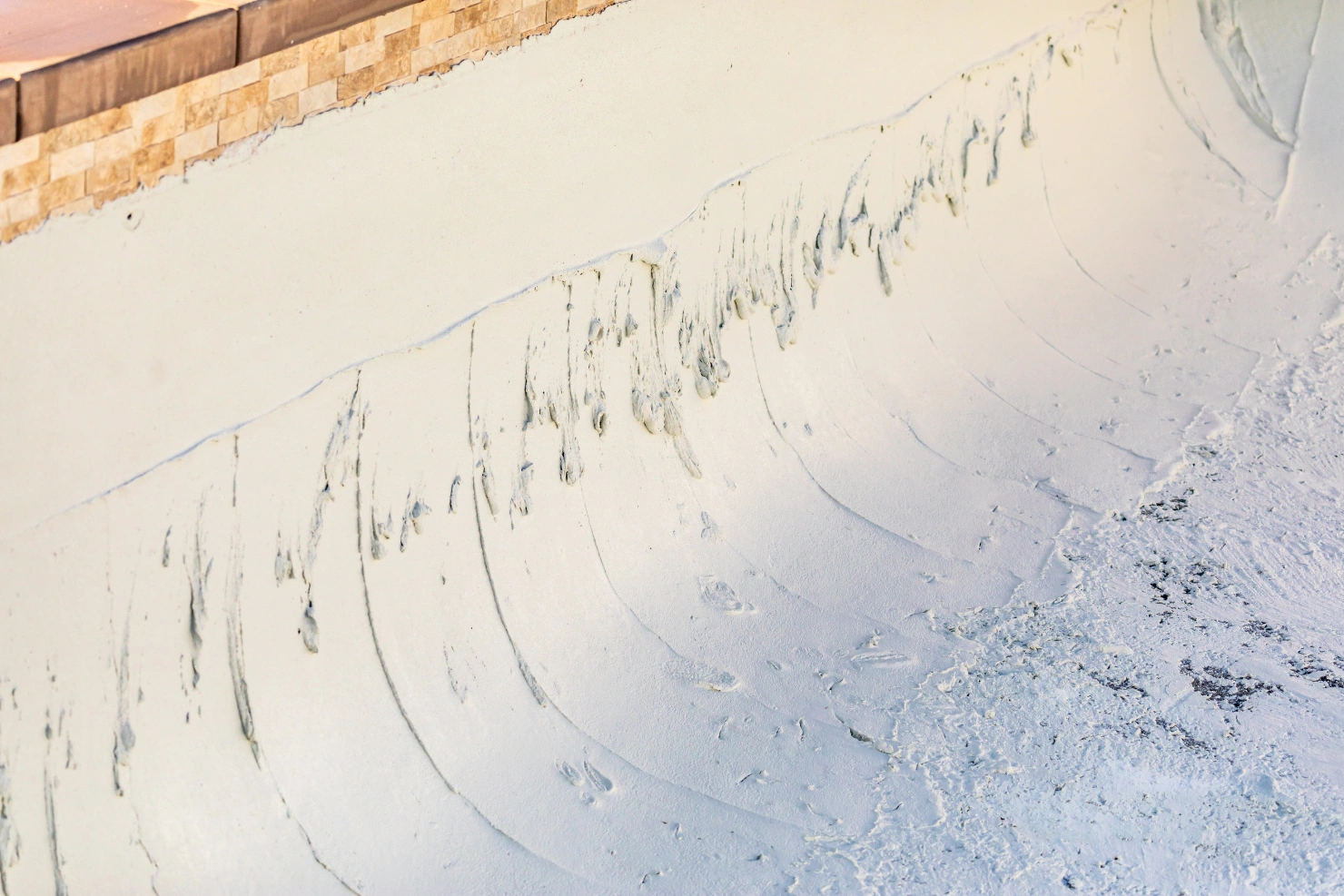
Pool plaster is a cement-based finish applied over a concrete or gunite shell. It remains submerged for most of its service life while being exposed to sanitizers, minerals, brushing, temperature changes, and fluctuating water conditions.
As the finish ages, its smooth outer layer can gradually wear away. The surface may become rough, porous, discolored, pitted, or thin enough to expose underlying material.
Surface Becomes Porous
A worn surface contains small pits and irregular areas that can hold dirt, metals, organic debris, and algae. Brushing becomes less effective because contamination can settle into the damaged finish rather than remaining on top of a smooth surface.
Porosity does not automatically mean a pool has a chemical problem. However, it can make recurring stains and algae more difficult to manage, especially when circulation, filtration, or sanitizer levels are also inconsistent.
Plaster Starts Eroding
Low pH, low alkalinity, and insufficient calcium hardness can create aggressive water that dissolves calcium carbonate from plaster. The result may include etching, roughness, discoloration, and gradual loss of surface material.
Once significant erosion occurs, adding chemicals cannot rebuild the missing finish. Chemical corrections may protect the remaining plaster, but they cannot return a deeply pitted surface to its original condition.
The Connection Between Plaster And Water Chemistry
Water balance and plaster condition affect each other. Poorly balanced water can damage a cement-based finish, while a damaged finish can make cleaning and consistent maintenance more challenging.
Homeowners should avoid assuming that every chemistry problem comes from old plaster. Faulty testing, heavy swimmer use, sunlight, rain, debris, filtration problems, and incorrect chemical dosing can also cause unstable readings.
Unstable pH Levels
Total alkalinity helps water resist rapid changes in pH. When alkalinity is too low, small chemical additions or contaminants can cause larger pH swings. Low pH can then contribute to corrosion and plaster etching.
A deteriorating surface is often evidence of previous or ongoing imbalance rather than the only cause of unstable pH. Testing the source water, pool water, and equipment operation helps identify the full problem.
Higher Maintenance Demand
Rough plaster can trap algae and organic material in areas that are difficult to brush clean. Chlorine is consumed by contaminants introduced by swimmers, dirt, and other organic matter, so recurring surface contamination can add to the pool’s overall maintenance demand.
Homeowners may notice that the water looks better immediately after treatment but becomes dull, cloudy, or discolored again. That pattern deserves a complete inspection rather than increasingly aggressive chemical additions.
Scale And Deposits
High calcium levels and poorly controlled pH can contribute to cloudy water and calcium scale. Scale often appears as white or gray deposits and may make an already rough surface feel even more abrasive.
Removing scale may improve the appearance when the plaster underneath remains sound. Resurfacing may be more appropriate when deposits are combined with widespread pitting, erosion, chipping, or exposed shell material.
Signs The Surface May Be Contributing
Chemistry readings alone cannot confirm that resurfacing is needed. Homeowners should look for a pattern that combines recurring water problems with visible or physical surface deterioration.
Common warning signs include:
- Rough or sandpaper-like walls and floors
- Stains that return after proper treatment
- Algae repeatedly forming in pitted areas
- White or gray mineral deposits
- Plaster dust or loose material after brushing
- Widespread fading or uneven discoloration
- Chipping, flaking, or delaminated areas
- Increasing chemical use without lasting improvement
- Water that remains cloudy despite proper filtration
- A finish approaching the end of its useful lifespan
These symptoms can also overlap with equipment or circulation problems. A professional inspection should evaluate the plaster, filtration system, water-test history, and chemical practices before recommending resurfacing.
Identifying Common Surface Problems
Different pool surface problems can look similar from a distance. The following comparison helps homeowners understand which conditions may respond to treatment and which ones commonly require a closer structural or finish evaluation.
| Surface Condition | Common Appearance | Possible Cause | Appropriate Response |
|---|---|---|---|
| Organic staining | Brown, green, or dark patches | Leaves, algae, or other organic debris | Test, brush, sanitize, and clean |
| Metal staining | Rust-colored, black, or blue-green marks | Iron, copper, or manganese | Test the water and identify the metal source |
| Calcium scale | White, gray, or crusty buildup | High pH, calcium, or unbalanced water | Correct water balance and assess removal options |
| Etching | Pale, rough, or pitted plaster | Aggressive water with low pH, alkalinity, or calcium | Correct chemistry and inspect finish depth |
| Mottling | Uneven shading or color variation | Finish characteristics, curing, chemistry, or aging | Professional cosmetic evaluation |
| Delamination | Hollow areas, flaking, or loose plaster | Loss of bond between finish and shell | Repair isolated areas or consider resurfacing |
A stain-removal product cannot correct delamination, and resurfacing should not begin until active leaks or structural cracks are addressed. Correct diagnosis prevents homeowners from paying for a cosmetic treatment that does not solve the underlying condition.
Water Problems That Damage Plaster Faster
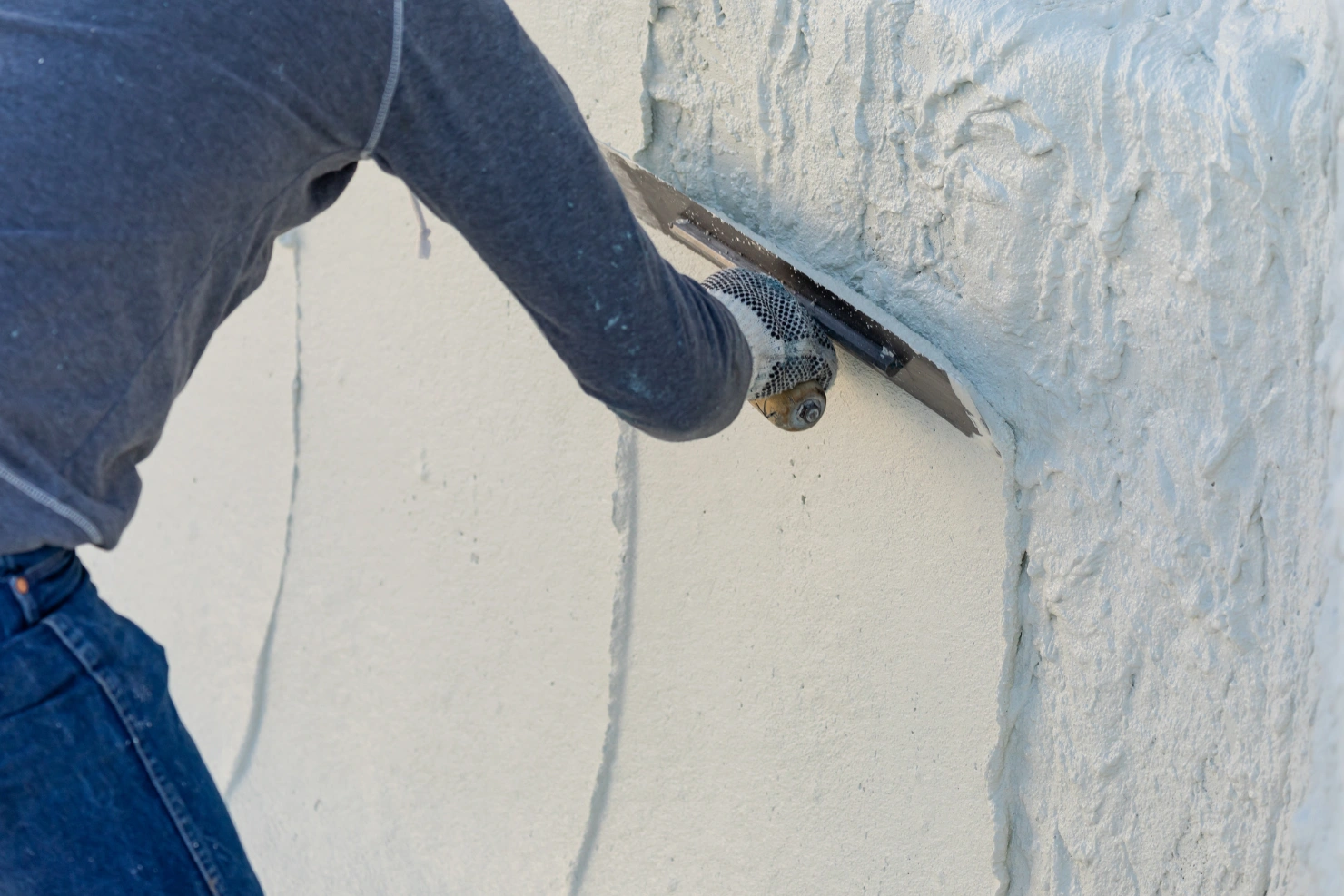
Aging is not the only reason plaster deteriorates. Poor water balance can shorten the useful life of the finish and create damage that becomes more visible each season.
Homeowners should monitor several connected factors rather than concentrating on chlorine alone.
Low pH And Alkalinity
Water with low pH can become corrosive to pool components and uncomfortable for swimmers. The CDC recommends maintaining residential pool pH between 7.0 and 7.8, while finish manufacturers or pool professionals may recommend a narrower operating target based on the pool system.
Low alkalinity reduces the water’s buffering ability, allowing pH to change more quickly. Repeated periods of aggressive water may etch plaster and expose aggregate within the finish.
Calcium Imbalance
Plaster contains calcium compounds, so calcium hardness is an important part of water balance. Water with insufficient calcium, particularly when combined with low pH or alkalinity, may draw calcium from the finish. Excessive calcium can contribute to scale and cloudiness.
The correct target depends on the finish, temperature, source water, and other chemistry readings. Chemical decisions should be based on complete testing rather than a single number.
Inadequate Sanitizer
Low sanitizer levels allow algae and other contamination to develop. Chlorine levels can fall because of sunlight, swimmer waste, dirt, and organic material entering the water.
Adding a large corrective dose may clear the water temporarily, but repeated algae in the same rough or pitted areas may indicate that the surface can no longer be cleaned effectively.
When Chemical Adjustments Stop Working
Chemical treatment remains essential even when plaster is old. However, there is a point when chemistry can manage the water but cannot restore the physical finish.
Resurfacing should be considered when roughness covers large areas, plaster continues to flake, stains remain embedded, repairs are spreading, or exposed sections of the shell are visible.
Pro Tip: Keep a written record of pH, total alkalinity, calcium hardness, sanitizer readings, chemical additions, and recurring surface issues. Several weeks of records can help HQ Pool Services determine whether the main concern involves water balance, filtration, source water, maintenance practices, or deteriorated plaster.
An acid wash is sometimes used for certain stains, but it removes a thin layer of plaster and is not a repair for deep erosion or delamination. Repeated acid washing can reduce the remaining thickness of an already worn finish.
Repair Or Complete Resurfacing
The correct solution depends on the size, depth, and distribution of the damage. One isolated chip does not always justify resurfacing the entire pool.
Widespread deterioration usually requires a more complete approach because numerous patches may remain visible and may not bond uniformly to aging surrounding plaster.
Spot Surface Repair
Spot repair may be reasonable for a small chip, limited delamination, or an isolated damaged area. The rest of the finish should still be firmly bonded and in serviceable condition.
Color matching can be difficult, particularly with an older or mottled surface. Homeowners should understand that a structurally sound patch may remain visible.
Full Pool Resurfacing
Full resurfacing removes or prepares the deteriorated finish, repairs identified defects, and applies a new interior surface. It provides a consistent working finish instead of treating one failing section at a time.
Before work begins, active leaks, shell movement, plumbing failures, and significant cracks should be evaluated. A new finish should not be used to hide an unresolved structural problem.
Choosing A New Finish
The replacement finish affects texture, color, maintenance needs, and project cost. Common options include traditional white plaster, quartz-enhanced finishes, and exposed aggregate or pebble finishes.
Traditional plaster provides a smooth, familiar appearance but requires consistent chemistry. Quartz finishes add colored aggregate and may offer improved durability. Pebble finishes provide a natural appearance and strong wear resistance, although the texture varies by product and aggregate size.
Homeowners should compare samples in water whenever possible. A dry finish sample can look different after installation because pool depth, sunlight, surroundings, and water movement influence the final color.
Protecting Fresh Pool Plaster
A newly resurfaced pool requires a controlled filling and startup process. The National Plasterers Council states that a fresh finish is especially susceptible to staining, scaling, and discoloration during its first 28 days.
The pool should normally be filled continuously to the operating level, followed by filtration, frequent brushing, and regular testing according to the finish manufacturer’s instructions. Water with unusually high or low pH, alkalinity, calcium hardness, or metal content may require a modified startup plan.
Care during this period can influence the finish’s appearance and long-term performance. Homeowners should avoid adding chemicals without guidance or interrupting the fill process unless instructed by the resurfacing professional.
Schedule A Professional Surface Inspection
Recurring chemistry problems do not always mean a pool needs resurfacing, but worn plaster should not be ignored. Roughness, flaking, embedded stains, widespread discoloration, and repeated algae growth can signal that the interior finish is no longer providing a clean, manageable surface.
HQ Pool Services provides professional pool resurfacing and surface inspections for homeowners throughout Maryland, Northern Virginia, and the DC Metro area. Our team evaluates the plaster condition, explains whether the problem can wait, and recommends resurfacing only when the existing finish has reached that point.
Contact HQ Pool Services to schedule a professional pool surface inspection and request an estimate.