Water Loss Near the Skimmer Should Never Be Ignored for Long
A dropping pool water level may seem like a minor seasonal issue, but water loss near the skimmer often points to a damaged seal, cracked skimmer body, or leaking plumbing connection.
“Could a small leak around the skimmer really affect the entire pool system?”
Left untreated, the problem can reduce suction, pull air into the circulation system, waste water, and place added strain on the pump. Identifying the source early helps prevent a manageable repair from becoming a larger and more expensive pool problem.
Key Takeaways
- Skimmer leaks waste water and chemicals.
- Air intrusion can strain pool pumps.
- Cracks and seals require prompt inspection.
- Accurate testing prevents unnecessary pool repairs.
- Early service protects circulation and structures.
The Skimmer’s Role in Pool Circulation
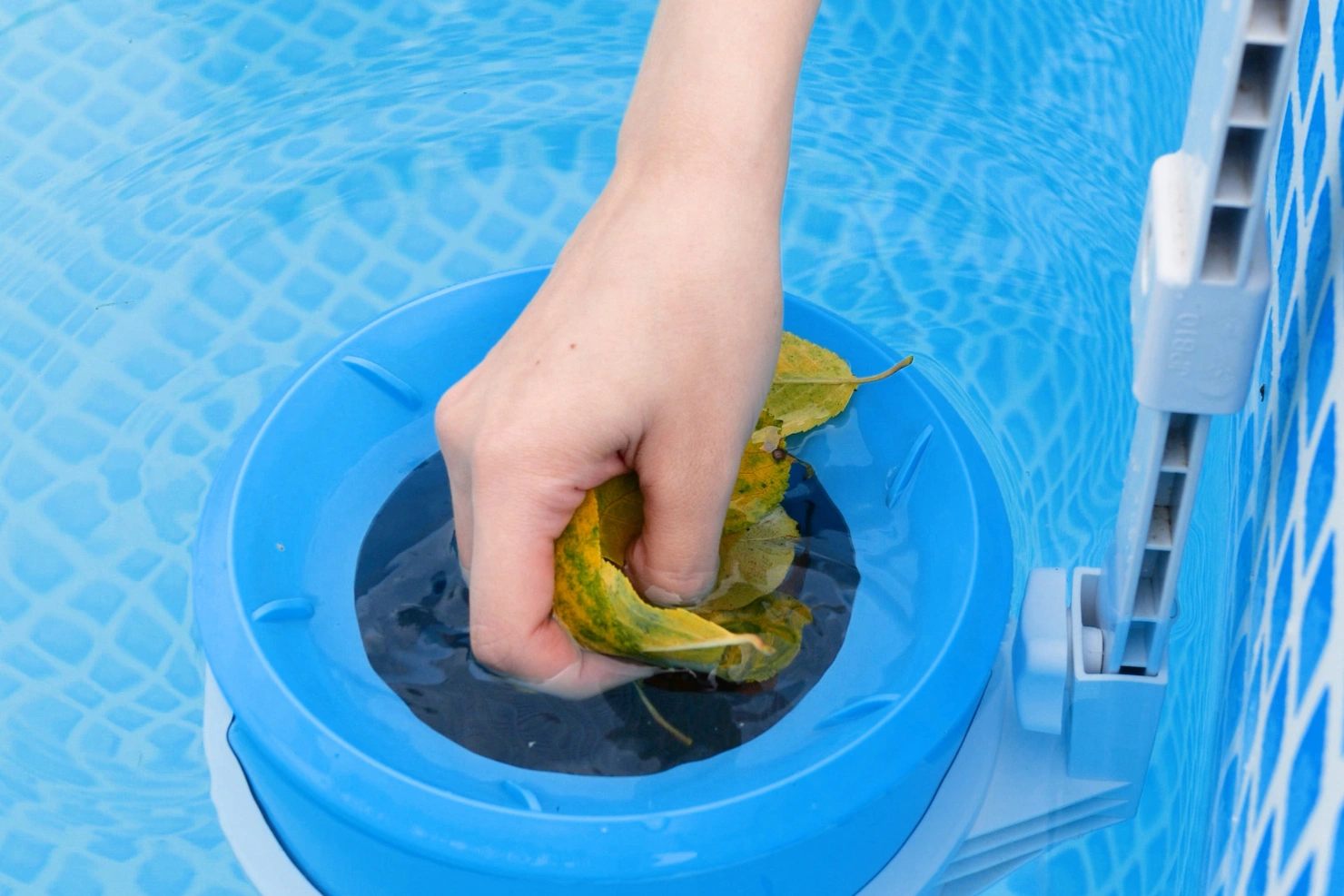
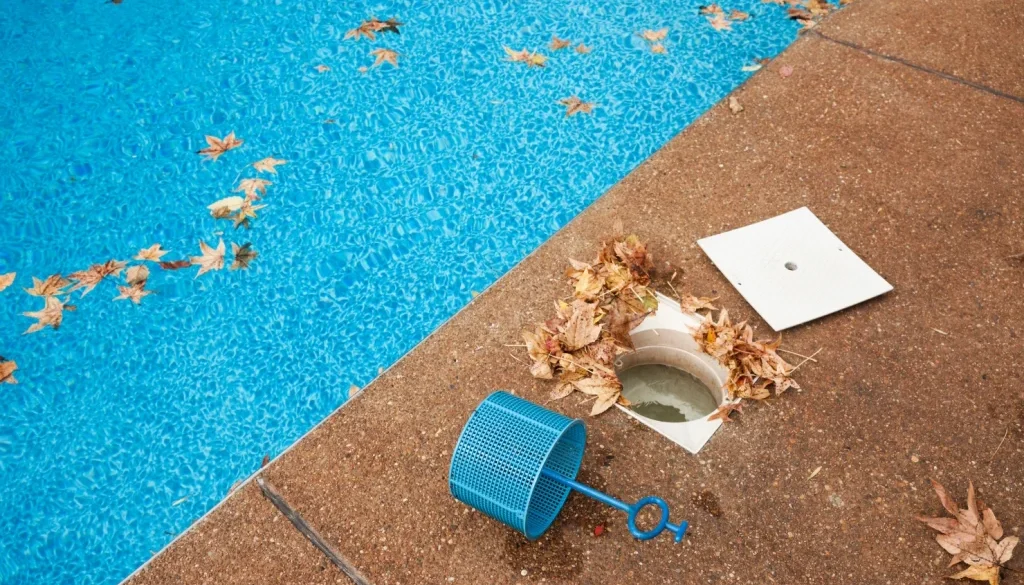
The pool skimmer is more than a collection point for leaves and insects. It is a key part of the circulation system that moves surface water toward the pump, filter, heater, and other installed equipment.
Water enters through the skimmer opening and passes through a basket that catches larger debris. From there, the suction line carries the water toward the pump before it moves through the filtration system and returns to the pool.
A properly working skimmer helps:
- Remove floating leaves, bugs, and debris
- Maintain steady water movement
- Support effective filtration
- Protect the pump from larger debris
- Reduce material settling on the pool floor
- Maintain balanced suction across the system
When the skimmer body, seal, or plumbing connection fails, the pool may lose water while the circulation system begins pulling air instead of a steady water supply.
Common Causes of Water Loss Near the Skimmer
Water can escape from several points around the skimmer assembly. The exact source may be above ground, inside the skimmer housing, behind the pool wall, or in the underground suction line.
Cracked Skimmer Body
Most skimmer bodies are made from durable plastic, but they can still crack with age. Ground movement, freeze damage, installation stress, deck movement, and long-term exposure to pool chemicals may all contribute to deterioration.
Some cracks are easy to see inside the skimmer throat or basket well. Others remain below the normal waterline or appear near plumbing connections, making them harder to find without testing.
Failing Wall Seal
The connection between the skimmer and the pool wall must remain watertight. In vinyl-lined pools, this area may include a faceplate, gasket, liner opening, and multiple screws.
A worn gasket, loose faceplate, damaged liner, or separated seal can allow water to move behind the pool wall. This type of leak may not produce visible water around the equipment pad.
Damaged Suction Line
The pipe running from the skimmer to the pump can crack, separate, or develop a leak at a fitting. Suction-line leaks may cause water loss while also pulling air into the plumbing.
Damage may occur near the skimmer connection, beneath the pool deck, or closer to the pump. Pressure or vacuum testing is often needed to confirm the affected section.
Loose Plumbing Fittings
Threaded fittings, unions, plugs, and connections around the skimmer can loosen or deteriorate. Small leaks may become more noticeable when the pump is operating and suction increases.
Repairs should address the actual failed fitting rather than simply applying sealant around the visible area.
Warning Signs Homeowners Should Watch
Skimmer leaks do not always begin with a visible crack. Many homeowners first notice changes in the water level, circulation, pump operation, or surrounding ground.
Common warning signs include:
- Water dropping faster than normal evaporation
- Water loss becoming greater while the pump runs
- Air bubbles entering the return jets
- The pump repeatedly losing prime
- Low suction at the skimmer opening
- A basket that sits loosely or shifts
- Visible separation near the skimmer wall joint
- Damp soil or soft ground near the pool
- Cracks inside the skimmer throat
- Water loss slowing near the skimmer opening
A pool may also require frequent refilling even though no obvious leak is visible. Repeatedly adding water can temporarily restore the level, but it does not correct the source of the loss.
Skimmer Leak Versus Normal Evaporation
Evaporation varies with heat, humidity, sunlight, wind, pool temperature, and swimmer activity. A leak usually creates a more persistent pattern that continues beyond expected weather-related loss.
| Indicator | Normal Evaporation | Possible Skimmer Leak |
|---|---|---|
| Water-loss pattern | Gradual and affected by weather | Persistent or unusually fast |
| Pump operation | Usually has little effect | Loss may change when pump runs |
| Air in returns | Generally absent | May appear with suction leaks |
| Pump priming | Normally remains stable | Pump may struggle to stay primed |
| Water stopping point | Continues gradually | May slow near skimmer level |
| Nearby soil | Usually remains dry | May become damp or soft |
| Chemical balance | Changes gradually | Frequent refilling may dilute chemicals |
A bucket test can help compare pool water loss with evaporation. However, it does not identify the exact location of a leak. Further inspection is needed when the pool loses more water than the comparison container.
Problems Caused by Delayed Skimmer Repairs
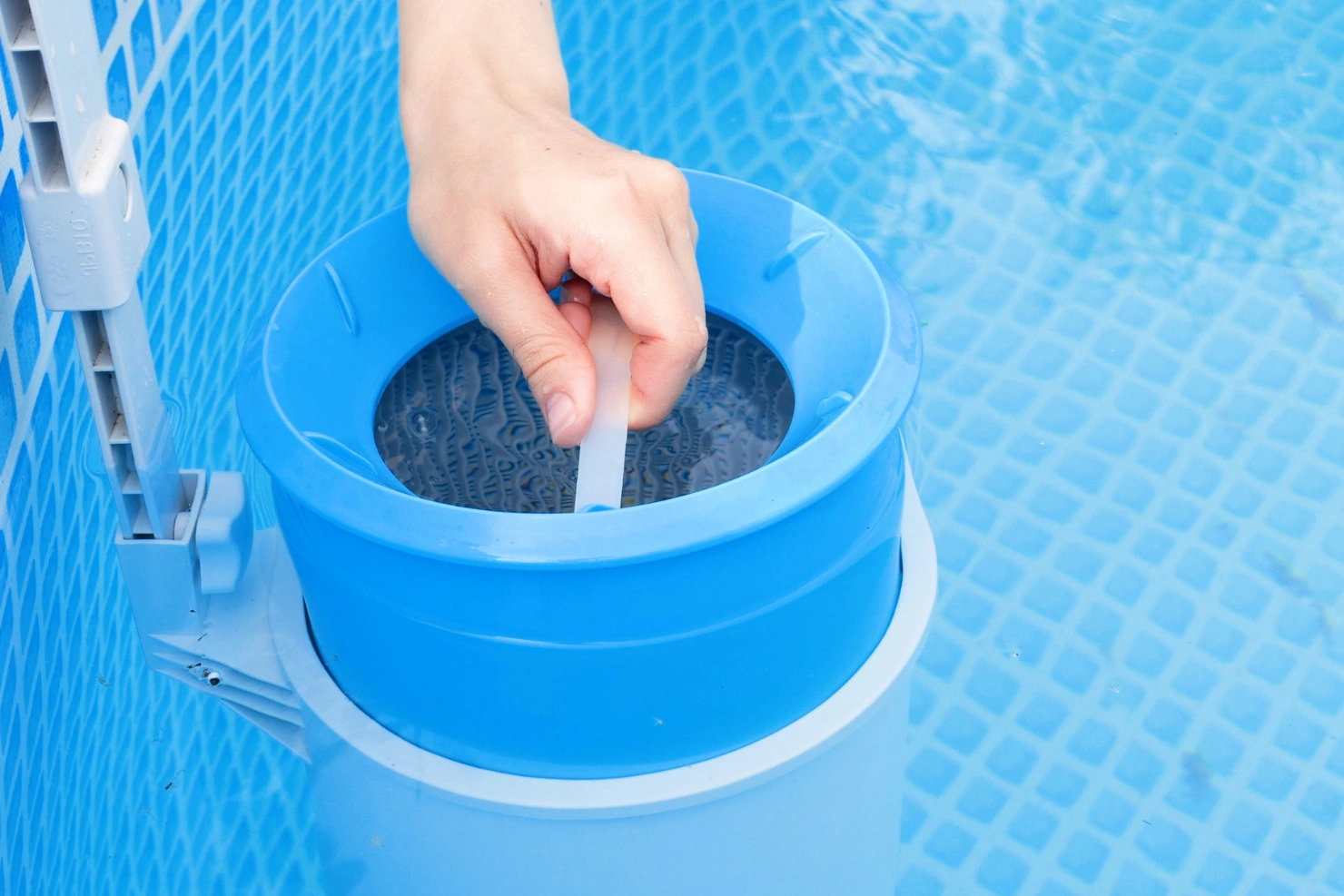
A leaking skimmer affects more than the visible waterline. Continuing to operate the pool without locating the source may create circulation, equipment, chemistry, and structural concerns.
Increased Water Use
A steady leak can waste a substantial amount of water over time. Frequent top-offs may also increase utility costs, especially during hot weather when evaporation is already high.
Automatic fill systems can make leaks harder to notice because they continuously replace lost water. Homeowners may first detect the problem through higher water bills or unstable chemistry.
Unstable Pool Chemistry
Fresh fill water changes the pool’s chemical balance. Repeated refilling may dilute chlorine, salt, stabilizer, alkalinity, calcium hardness, and other treatment levels.
This can lead to more frequent testing and chemical adjustments. Sanitizer demand may also increase when circulation becomes inconsistent.
Reduced Pump Performance
A leak on the suction side can allow air into the plumbing. Air pockets reduce the pump’s ability to move water efficiently and may cause surging, loss of prime, or irregular filter pressure.
Running a pump without a reliable water supply can contribute to overheating, seal damage, and premature wear.
Surrounding Soil Damage
Water escaping behind the pool wall or beneath the deck can disturb nearby soil. Ongoing saturation may contribute to erosion, settling, deck movement, or voids around the pool structure.
The risk depends on the leak location, soil conditions, drainage, and how long the problem has continued.
How Professionals Locate Skimmer Leaks
Accurate leak detection reduces unnecessary digging and prevents repairs from being made in the wrong area. The testing method depends on the pool type, leak pattern, and visible symptoms.
A professional inspection may include:
- Checking the skimmer body for cracks
- Examining the faceplate and wall joint
- Inspecting visible plumbing fittings
- Testing suction at the skimmer opening
- Performing dye tests near suspected areas
- Comparing water loss with the pump on and off
- Pressure testing the skimmer line
- Inspecting the pump for air intrusion
- Isolating individual plumbing lines
Dye testing can help confirm a crack or failed joint when the water is calm. The dye may be drawn into an opening where water is escaping.
Pressure testing is more useful when the leak may be in underground plumbing. The line is isolated and tested to determine whether it can hold pressure.
Pro Tip: Mark the pool water level and observe it with the pump running and again with the system off. A clear difference between the two conditions can help narrow the investigation.
Repair Options for a Damaged Skimmer
The correct repair depends on the failed component, the pool’s construction, the condition of the plumbing, and the extent of the damage. A surface patch is not appropriate for every skimmer problem.
Gasket And Seal Repair
A worn gasket or failed seal may be corrected by removing the faceplate, inspecting the surrounding material, and installing the correct replacement components.
In vinyl pools, the liner must remain properly positioned during the repair. Damaged liners may require additional work before the skimmer connection can be resealed.
Skimmer Crack Repair
Some small, accessible cracks can be repaired with materials approved for pool applications. The skimmer surface must be prepared correctly so the repair bonds to the existing body.
Crack repairs are less suitable when the plastic is brittle, the damage continues through a plumbing connection, or the skimmer has shifted away from the pool wall.
Plumbing Line Repair
A leaking pipe may require access beneath the deck or near the skimmer. The damaged section is located, exposed, removed, and replaced with compatible plumbing materials.
A technician should test the line after the repair before the access area is closed.
Full Skimmer Replacement
Replacement is often the more reliable option when the skimmer body is badly cracked, deteriorated, distorted, or separated from the pool structure.
The process may involve cutting the deck, disconnecting the old plumbing, removing the failed unit, setting a new skimmer, reconnecting the suction line, sealing the wall connection, and restoring the surrounding area.
Repairing Versus Replacing the Skimmer
A repair may cost less initially, but replacement can provide better long-term value when the existing skimmer has extensive damage. The decision should be based on condition rather than age alone.
Important factors include:
- Location and size of the crack
- Condition of the skimmer plastic
- Damage around plumbing connections
- Movement at the pool wall
- Previous repair attempts
- Accessibility below the deck
- Condition of the suction line
- Pool finish or liner condition
- Reliability of the proposed repair
A stable, isolated defect may be repairable. Widespread deterioration or structural separation usually supports replacement.
Preventing Future Skimmer Problems
Routine inspection can help catch developing problems before water loss becomes severe. Homeowners should pay attention to changes in suction, water level, basket fit, and pump behavior.
Helpful maintenance steps include:
- Keep the water near the recommended operating level
- Empty the basket before it becomes packed
- Replace cracked lids and damaged baskets
- Avoid overtightening faceplate screws
- Inspect the wall joint during pool opening
- Address pump priming problems promptly
- Winterize skimmer plumbing correctly
- Monitor unexplained water-level changes
- Keep heavy objects away from skimmer lids
- Check nearby deck cracks for movement
Low water can allow the skimmer to draw air into the system. Water that is too high may reduce effective surface skimming. The correct level is usually near the middle portion of the skimmer opening, though the pool’s design should guide the final setting.
When to Schedule Pool Skimmer Repair
Skimmer service should be scheduled when the water level continues to fall, the pump pulls air, suction weakens, or damage becomes visible. Waiting for the leak to worsen can increase water use and make nearby damage more difficult to repair.
The system should also be inspected when:
- Water loss stops near the skimmer opening
- The pump will not maintain prime
- Air repeatedly appears in the pump basket
- Soil near the pool remains damp
- The faceplate separates from the wall
- The skimmer body moves under light pressure
- Previous patches begin leaking again
Avoid operating the pump when the water level is too low for the skimmer to maintain steady flow. Shut the system down and arrange an inspection if the pump begins pulling air.
Protect Your Pool From Ongoing Water Loss
Water loss near the skimmer should never be treated as a normal pool problem. A failed seal, cracked body, or damaged suction line can affect circulation, water chemistry, pump performance, and the ground surrounding the pool.
HQ Pool Services provides pool skimmer inspection, leak diagnosis, repair, and replacement for homeowners across DC, Maryland, and Northern Virginia. We identify the source of the problem and recommend a repair based on the actual condition of the skimmer and plumbing.
Stop repeated water loss before it leads to larger pool problems. Contact HQ Pool Services today to Request a Quote.