Why Green Pool Water Keeps Coming Back After Chemical Treatment
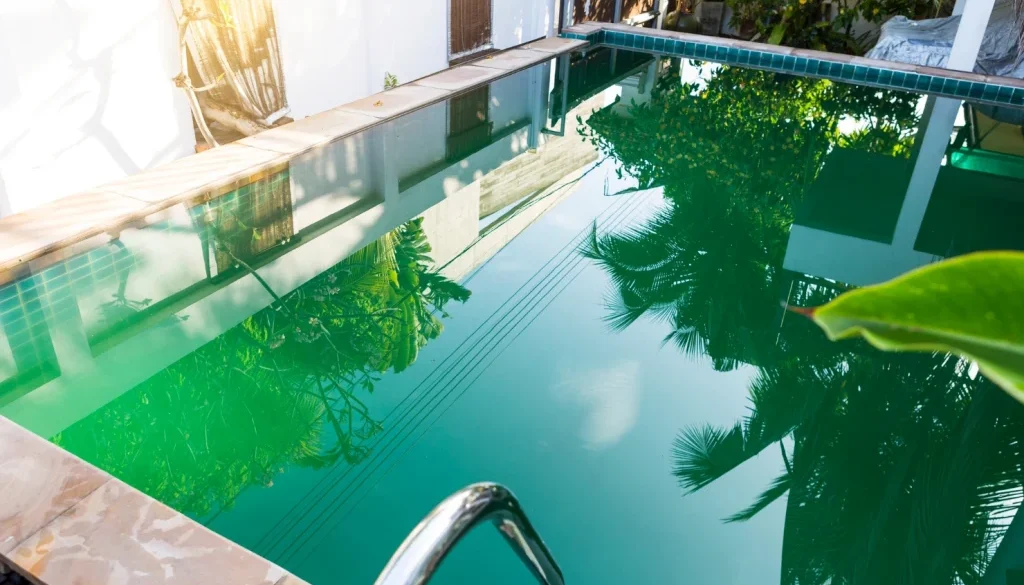
Green pool water can be frustrating, especially when you already added chemicals and expected the problem to disappear. The water may look clear for a few days, then turn cloudy, dull, or green again once the pool gets heavy use, rain, heat, or poor circulation.
“So why does green pool water keep coming back after chemical treatment?”
In many cases, the issue is not just a lack of chlorine. Algae can return when water chemistry is unbalanced, filters are dirty, circulation is weak, or algae remains attached to pool walls, steps, and hidden corners. Understanding the real cause helps you stop guessing, avoid over-treating the water, and get your pool back to a clean, safe, and swim-ready condition.
Key Takeaways
- Green water returns from unresolved causes.
- Shock alone cannot remove attached algae.
- Dirty filters slow water recovery quickly.
- Brushing helps chemicals reach hidden algae.
- Professional cleaning prevents repeated chemical guessing.
Why Green Pool Water Returns After Treatment
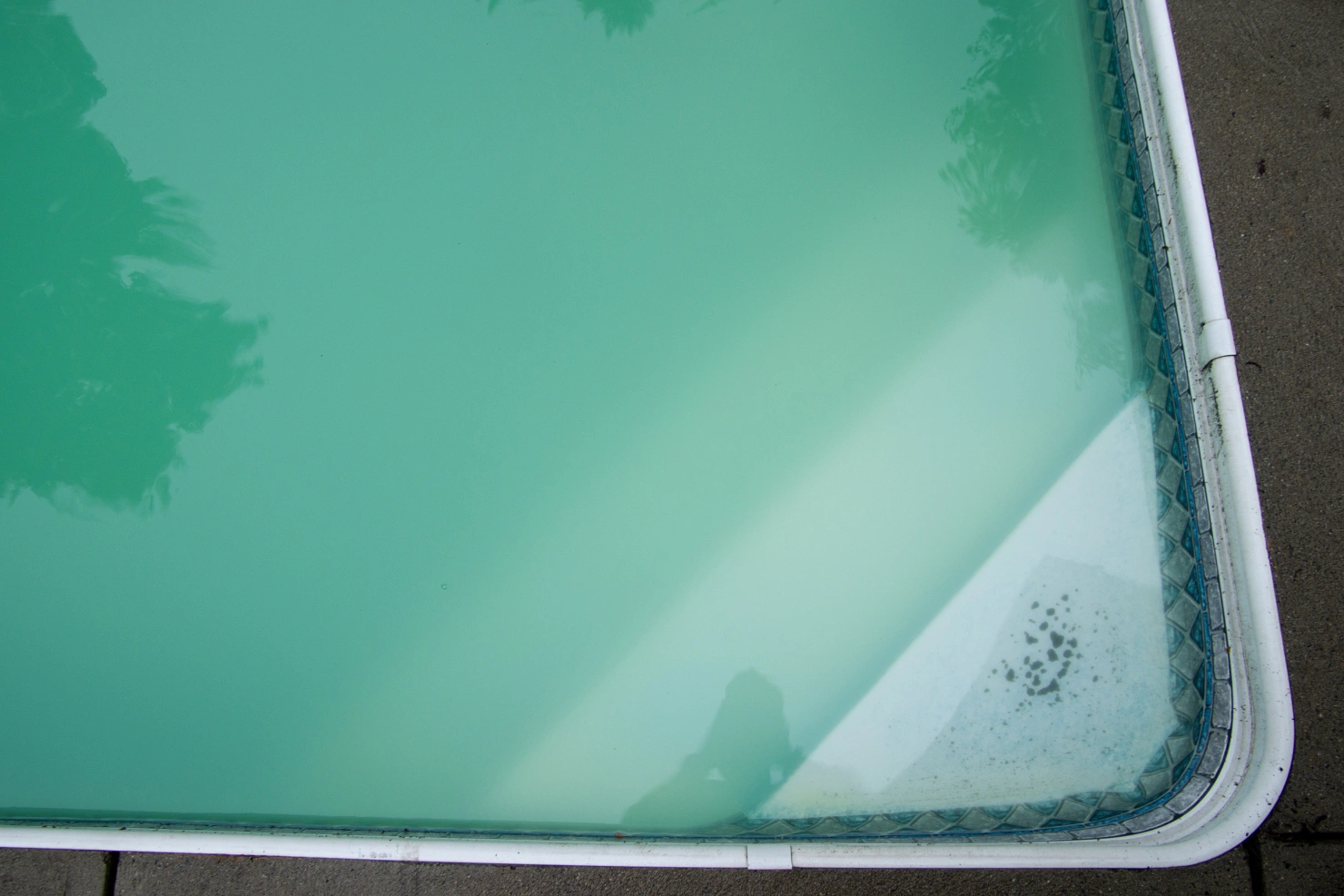
Green water usually returns because the treatment handled the visible problem but did not correct the conditions that allowed algae to grow. A pool can look better after chemicals are added, but algae can still survive on surfaces, inside low-flow areas, or in water that is not balanced correctly.
Chemical treatment works best when it is supported by brushing, filtration, circulation, and follow-up testing. Without those steps, the pool may clear briefly before the same issue comes back.
Treatment Was Incomplete
One chemical treatment may not be enough if algae growth is heavy. Green water can contain suspended algae, dead algae, organic debris, and surface buildup at the same time.
If the pool is not brushed, filtered, and retested after treatment, algae can remain in the system. That leftover growth can restart the problem once sanitizer levels drop again.
Algae Was Still Attached
Algae often sticks to pool walls, steps, corners, ladders, seams, and shaded areas. These spots may not get the same chemical contact as open water.
A pool may look cleaner after shock, but the walls can still feel slippery. That slick feeling often means surface buildup is still present.
Water Balance Drifted
Chlorine works better when water chemistry is balanced. If pH is too high or sanitizer levels are too low, treatment may not work as expected.
Rain, heat, heavy use, sunscreen, leaves, and debris can all change water conditions. That is why testing after treatment is just as important as adding chemicals.
The Most Common Causes Of Recurring Green Pool Water
Recurring green water usually comes from more than one issue. A pool may have low chlorine, poor circulation, and dirty filters at the same time.
Homeowners often treat the water first because the green color is easy to see. The real cause, however, may be hidden in the system.
Common reasons green pool water keeps returning include:
- Low chlorine or sanitizer levels
- Unbalanced pH or alkalinity
- Dirty or clogged filters
- Weak pump flow
- Poor circulation in corners and steps
- Debris sitting too long in the pool
- Heavy rain diluting pool chemicals
- Hot weather increasing chlorine demand
- Missed brushing on walls and floors
- Algae hiding behind ladders or fixtures
A pool that turns green again within a few days usually needs more than another round of shock. It needs a full look at water balance, filtration, brushing, circulation, and surface condition.
Why Shock Alone Does Not Always Fix A Green Pool
Pool shock can help kill algae, but shock alone does not remove every cause of green water. It must be paired with cleaning and circulation so dead algae and debris can leave the water.
If the filter is dirty or the pump is not moving water well, the cleanup process slows down. The pool may stay cloudy, dull, or green even after treatment.
Shock Needs Support
Shock works best when algae is exposed to the treatment. Brushing breaks algae loose from walls, steps, and corners so chemicals can reach it.
After treatment, the pool also needs proper filtration. Dead algae and fine particles must be captured instead of staying suspended in the water.
Filters Must Work
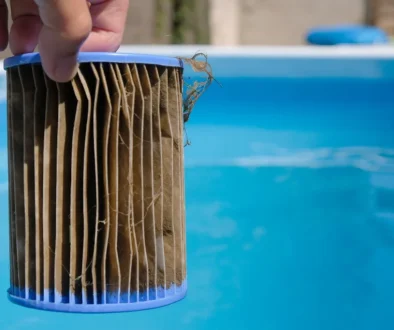
A filter helps remove the material left behind after treatment. If the filter is clogged, dirty, or overdue for cleaning, water cannot clear properly.
This is one reason some pools stay cloudy after turning from green to blue. The algae may be dead, but the water still needs filtering and cleaning.
Timing Matters
Green pool recovery is not finished the moment chemicals are added. The pool needs circulation, brushing, filter cleaning, and retesting.
Skipping follow-up care can make treatment feel like a temporary fix. The pool may look better at first, then slowly drift back into the same problem.
How Poor Circulation Helps Algae Come Back
Circulation moves treated water through the pool. When circulation is weak, some areas do not receive enough sanitizer or movement.
These low-flow spots are where algae often starts. Steps, corners, benches, ladders, and shallow areas can hold debris and allow algae to attach.
Poor circulation may be caused by:
- Clogged skimmer baskets
- Dirty pump baskets
- Low water level
- Blocked returns
- Dirty filters
- Air in the system
- Weak pump performance
- Poorly aimed return jets
Good circulation helps chemicals distribute evenly. It also helps push debris toward the skimmer and filter so the pool can recover faster.
The Role Of Pool Filters In Green Water Problems
Filters are a major part of green pool recovery. They remove fine particles, dead algae, dirt, and debris after treatment.
A pool can have enough chemicals and still look bad if the filter is not doing its job. That is why filter condition should always be checked when green water keeps returning.
| Filter Issue | How It Affects Pool Water | What Homeowners May Notice |
|---|---|---|
| Dirty Filter | Reduces water flow and filtration strength | Water looks cloudy or dull |
| Clogged Filter | Limits debris and algae removal | Green water returns quickly |
| Poor Cleaning Schedule | Allows buildup inside the system | Filter pressure changes often |
| Worn Filter Media | Reduces filtration quality | Pool never fully clears |
| Full Skimmer Basket | Restricts water movement | Weak suction or slow circulation |
Filter care depends on the type of pool system. Cartridge filters, sand filters, and DE filters each require the right cleaning method.
If green water keeps coming back, HQ Pool Services checks the filter and circulation before assuming the pool only needs more chemicals. This helps avoid wasteful treatment and protects the pool system from unnecessary stress.
Why Brushing Is Essential For Algae Removal
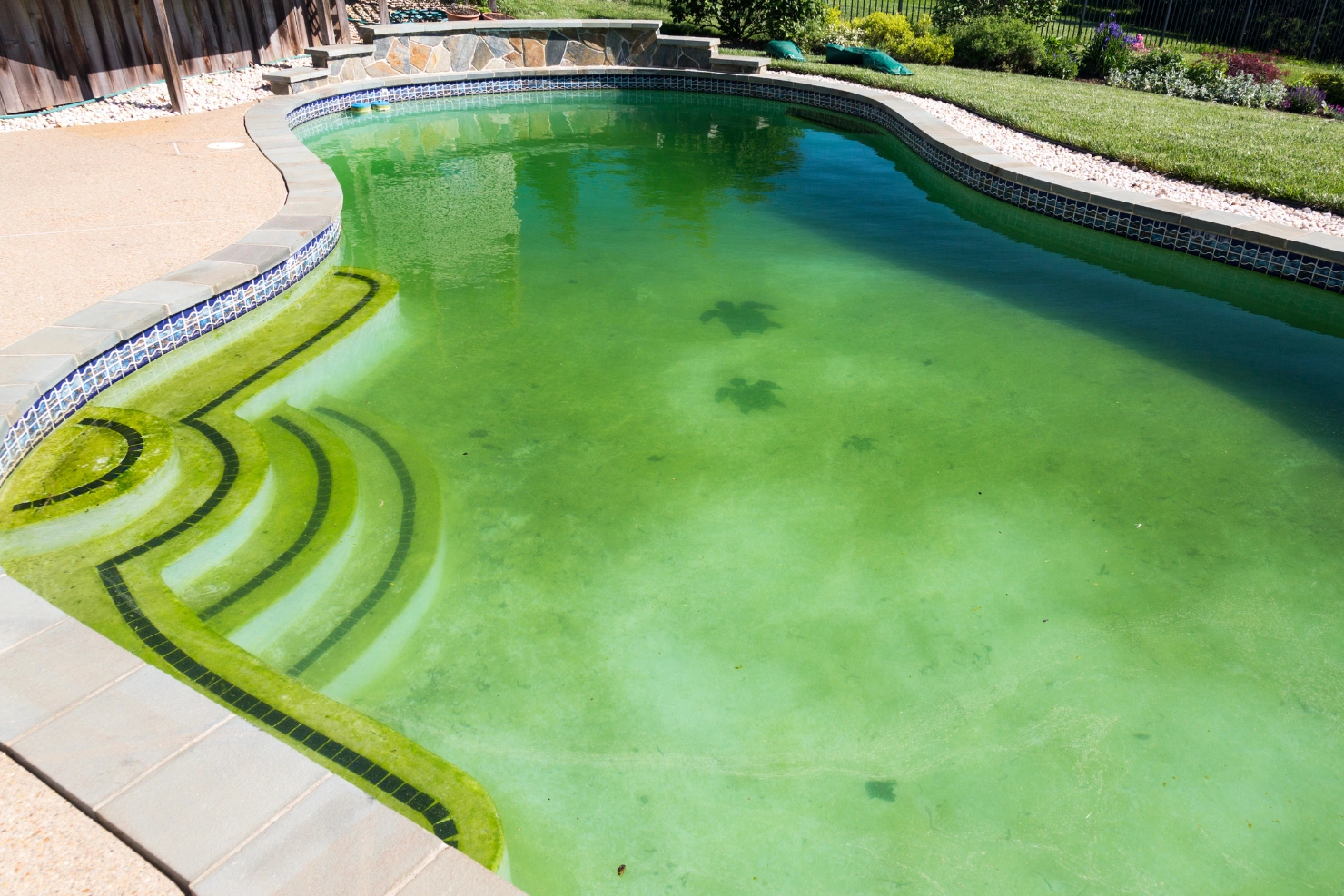
Brushing is one of the most important steps in algae removal. Chemicals treat the water, but brushing targets the surfaces where algae can stay attached.
Without brushing, algae can remain on walls, floors, stairs, and corners. It may survive treatment and spread again when conditions become favorable.
Walls And Steps
Pool walls and steps can hold algae even when the water looks treated. These areas need direct brushing to break surface attachment.
Steps are especially common problem areas because swimmers enter, exit, and leave behind oils, sunscreen, and debris.
Corners And Seams
Corners, seams, and edges often have weaker water movement. Algae can collect there before spreading to other areas.
Brushing these spots helps move algae into the water where the filter and chemicals can work on it.
Shaded Pool Areas
Shaded areas can stay damp and slick. They may also receive less sunlight and water movement, which can support buildup.
These areas should be brushed regularly during normal maintenance, not only when the pool turns green.
How Rain, Heat, And Heavy Use Trigger Green Water
Weather and pool use can quickly change water conditions. A pool that was balanced earlier in the week can shift after a storm, a hot day, or a busy weekend.
Rain can dilute sanitizer and bring debris into the pool. Heat and sunlight can increase chlorine demand. Heavy swimming adds sweat, body oils, sunscreen, dirt, and organic material.
These changes do not always turn the pool green overnight. They often start with dull water, slippery surfaces, or mild cloudiness.
If these early signs are ignored, algae can spread fast. That is why testing, brushing, and filter checks matter most during hot and rainy periods.
Signs Your Pool Needs Professional Green Pool Cleaning
Some green pool problems can be corrected with routine care. Others need professional service because the problem keeps returning or has already spread.
Professional cleaning helps when the issue involves algae, staining, chemical imbalance, poor circulation, or filtration problems at the same time.
You may need professional green pool cleaning if:
- Green water returns within days of treatment
- Pool walls still feel slimy after shock
- Water stays cloudy after chemicals are added
- Brown, green, or black stains appear
- Brushing does not remove discoloration
- Chlorine levels drop quickly
- The filter needs constant cleaning
- The pool has a strong chemical odor
- You are unsure if the issue is algae or staining
A recurring problem should not be handled by adding random chemicals. Too many products can create imbalance, waste money, and make cleanup harder.
How Professional Algae And Stain Removal Solves The Root Problem
Professional algae and stain removal focuses on the cause, not just the color of the water. HQ Pool Services inspects the pool, tests the water, checks circulation, brushes affected surfaces, and applies treatment based on the actual problem.
This controlled approach is important because green water, brown stains, metal staining, leaf staining, and dead algae can look similar. Each issue may need a different solution.
Pool Inspection
A proper inspection helps identify where the problem started. The pool surface, water condition, equipment flow, filter condition, and problem areas are all reviewed.
This step helps prevent the wrong treatment from being used.
Water Testing
Water testing shows whether sanitizer, pH, alkalinity, and other chemistry factors are affecting treatment. Balanced water supports better cleaning and safer swimming conditions.
Testing also helps reduce the risk of over-treating the pool.
Controlled Treatment
Controlled treatment means using the right process for the pool’s condition. That may include brushing, targeted chemicals, longer circulation, filter cleaning, and water rebalancing.
HQ Pool Services uses this process to help homeowners in Maryland, Virginia, and the DC Metro area restore clean water without unnecessary guesswork.
Pro Tip: Do not stop maintenance once the water changes from green to blue. Keep the pump running, clean the filter as needed, brush the walls and steps, and retest the water. Many green pools return because the cleanup stopped before dead algae and surface buildup were fully removed.
How To Prevent Green Pool Water From Coming Back
Prevention is easier than recovery. Once algae spreads, the pool usually needs more brushing, more filtration, and more time to clear.
A consistent maintenance routine helps keep algae from getting a foothold in the first place.
To help prevent green water from returning:
- Test the water regularly
- Keep chlorine at the right level
- Maintain proper pH and alkalinity
- Brush walls, steps, and corners weekly
- Remove leaves and debris quickly
- Empty skimmer and pump baskets
- Clean filters when needed
- Run the pump long enough for proper circulation
- Check water after rain or heavy use
- Schedule service before algae spreads
Small problems are easier to fix early. Dull water, slick steps, or light staining should be handled before the pool turns fully green.
When To Schedule Algae And Stain Removal Service
Schedule algae and stain removal service when green water keeps coming back, stains start spreading, or chemical treatment does not fully clear the pool. These signs usually mean the issue is deeper than normal maintenance.
You should also schedule service if you are not sure whether the discoloration is algae, metal staining, leaf staining, or surface buildup. Using the wrong treatment can delay results and may make some stains harder to remove.
HQ Pool Services provides professional algae and stain removal for residential pools throughout the DC Metro area, including Maryland and Virginia. The goal is to restore clear water, correct the cause, and help prevent the same problem from returning.
Conclusion
Green pool water that keeps coming back usually points to an unresolved issue. Low sanitizer, poor circulation, dirty filters, unbalanced water, missed brushing, and hidden algae can all make treatment fail.
The best solution is not always more chemicals. The right solution is a complete process that includes testing, brushing, filtration, circulation checks, and controlled treatment.
HQ Pool Services helps homeowners recover green pools and remove stubborn stains with professional cleaning and water recovery. Contact us today to request algae and stain removal service and get your pool back to a clean, safe, and swim-ready condition.