Smart Pool Lighting Is Changing Nighttime Swimming Across DC
Pool lighting has moved far beyond a single white bulb beneath the water. Homeowners across Washington, DC, Maryland, and Northern Virginia are now choosing LED fixtures, colour-changing settings, and app-controlled systems that make pools easier to enjoy after sunset.
“But what makes smart pool lighting such a valuable upgrade for nighttime swimming?”
Better visibility, flexible controls, lower energy use, and customised lighting scenes can improve both safety and atmosphere. As older fixtures begin to fail, many pool owners are replacing them with modern systems that offer stronger performance and a more inviting backyard experience.
Key Takeaways
- Smart lighting improves nighttime swimming visibility.
- LED fixtures use less energy overall.
- Compatibility checks prevent costly installation problems.
- Flickering lights may signal electrical faults.
- Professional inspections support safer lighting upgrades.
What Smart Pool Lighting Means
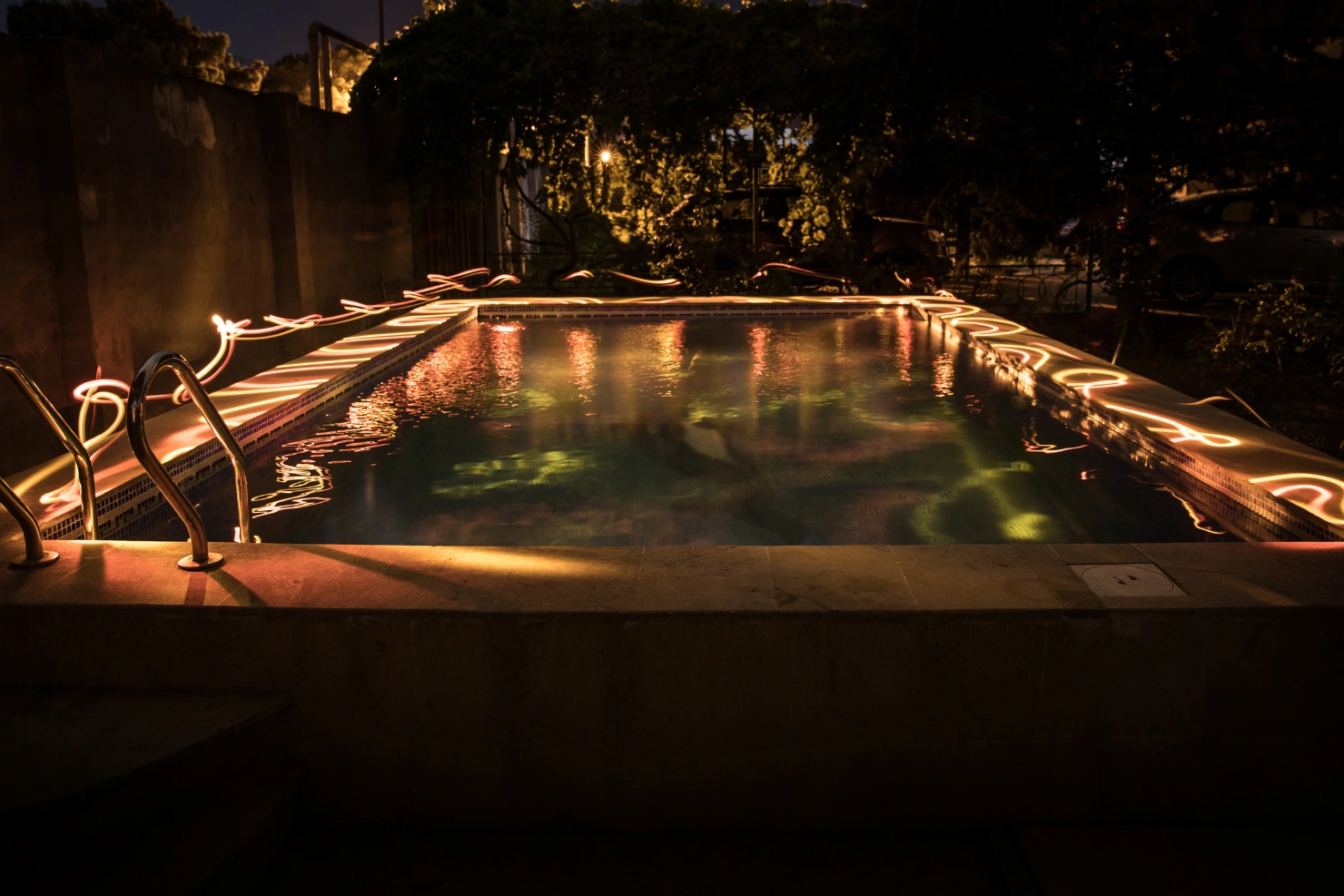
Smart pool lighting combines modern LED fixtures with controls that give pool owners more flexibility than a standard wall switch. Depending on the system, users may be able to select colours, change brightness, activate preset scenes, create schedules, or manage lighting through compatible pool automation equipment.
The term “smart” does not describe one universal feature. Some lights operate through a dedicated controller, while others connect to a larger automation system that also manages pumps, heaters, water features, or spa settings.
LED Pool Fixtures
LED fixtures produce light through semiconductor technology rather than heating a filament. This allows them to use less energy than comparable incandescent lights while providing a longer useful operating life.
The U.S. Department of Energy reports that good-quality white LED products may provide 30,000 to 50,000 hours of useful life or longer, although the actual lifespan of a pool fixture also depends on installation quality, operating conditions, water intrusion, voltage, and heat management.
Remote Light Controls
Modern controls can make pool lighting easier to operate from the patio or inside the home. Depending on the product, the owner may use an app, remote control, wall-mounted controller, timer, or central automation panel.
Compatibility must be confirmed before installation. A light that can communicate with one manufacturer’s automation platform may not function correctly with another system.
Custom Lighting Scenes
Colour-changing fixtures can cycle through multiple colours or hold a selected shade. Some control systems also provide preset scenes for parties, quiet evening swimming, holidays, or coordinated pool and spa lighting.
These features affect appearance rather than water safety systems. Pool lighting should support visibility, but it does not replace barriers, supervision, compliant electrical protection, or other required pool-safety measures.
Pool Lighting Trends Across The DC Metro Area
Pool owners are increasingly treating lighting as part of the entire backyard design instead of viewing it as a basic underwater component. The goal is often to create a pool area that remains functional and visually balanced after sunset.
Common lighting upgrades include:
- Colour-changing LED underwater fixtures
- App-based or remote lighting controls
- Programmable lighting schedules
- Warm-white and bright-white lighting options
- Coordinated pool, spa, step, and water-feature lights
- Integration with compatible pool automation systems
- Replacement of ageing incandescent fixtures
- Smaller lights placed across multiple pool zones
These upgrades can be particularly useful for pools with benches, tanning ledges, attached spas, waterfalls, or irregular shapes. One powerful fixture may create glare and shadows, while several properly placed fixtures can provide more even coverage.
Better Visibility After Sunset
Reliable lighting makes it easier to see the pool structure and the people using it. Swimmers may be able to identify steps, benches, walls, ladders, ledges, and changes in water depth more clearly.
Lighting plans should consider the complete area, not just the centre of the pool. Underwater fixtures illuminate the vessel, while deck, pathway, and landscape lights support movement around the surrounding property.
Safer Pool Entry
Steps and tanning ledges can be difficult to judge in poorly lit water. A fixture aimed towards these features may improve visibility as swimmers enter or leave the pool.
Lights should be positioned to reduce harsh glare. A bright fixture aimed directly towards a seating area or the house may make it harder to see rather than improving overall visibility.
Clearer Water Views
Underwater lighting can make swimmers and objects beneath the surface easier to identify. It can also help an owner notice debris or reduced water clarity during evening use.
Lighting should never be used as proof that the water is properly sanitised. Clear-looking water can still have chemistry problems, so routine testing and filtration remain necessary.
Improved Deck Awareness
Pool decks contain furniture, equipment, level changes, coping edges, and other obstacles. Underwater lighting alone may leave these areas dark.
Low-glare pathway and deck lighting can fill the gap between the illuminated water and the rest of the backyard. The result is a more balanced environment with fewer abrupt dark areas.
Traditional Lights Versus Smart LED Systems
Traditional incandescent fixtures and modern LED systems differ in more than colour selection. The fixture design, controls, voltage, energy use, and replacement process can all affect which option makes sense for a particular pool.
| Feature | Traditional Incandescent Light | Smart LED Pool Light |
|---|---|---|
| Light options | Usually fixed white light | White, colour-changing, or preset scenes |
| Controls | Typically a manual switch | Switch, controller, timer, app, or automation |
| Energy use | Higher for comparable output | Generally lower |
| Bulb service | Bulbs may be replaceable | Many models use integrated LED assemblies |
| Automation | Usually limited | Available on compatible systems |
| Upgrade concerns | Wattage, lens, gasket, fixture condition | Niche, voltage, transformer, controls, cord, and automation compatibility |
LED lighting can improve energy efficiency, but homeowners should compare complete fixtures rather than assuming every LED product performs the same. Beam spread, brightness, colour quality, fixture placement, and control compatibility all influence the finished result.
Some listed LED pool lights operate at 12 volts, while other products are available in both 12-volt and 120-volt versions. This difference is one reason an existing fixture should be inspected before a replacement is selected.
Smart Lighting Improves Pool Atmosphere
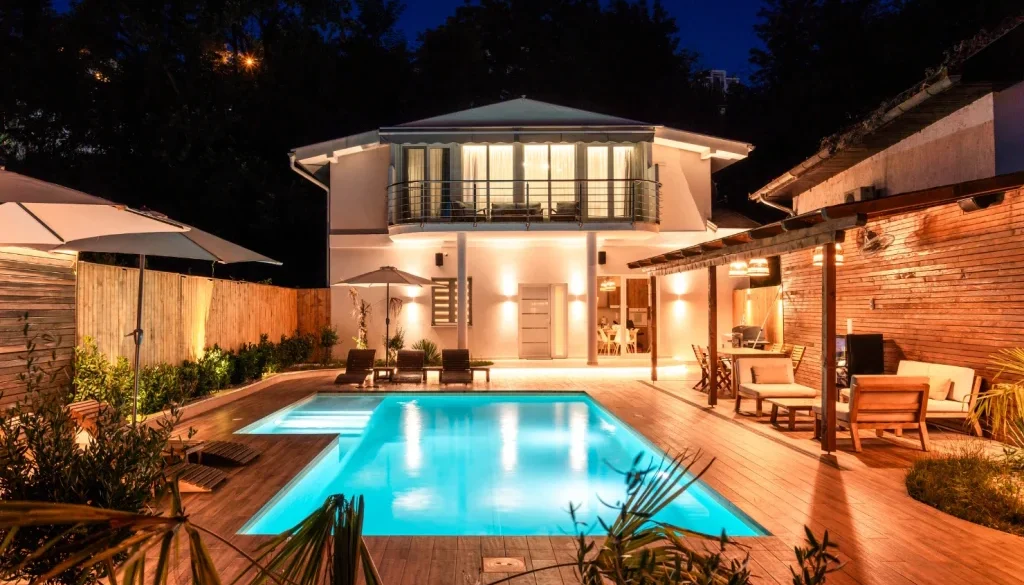
Lighting changes how the water, pool finish, landscaping, and surrounding structures look at night. A bright white setting can support active swimming, while softer colours can create a calmer environment.
Pool colour also affects the final appearance. The same fixture may look different in a white plaster pool than it does against a dark aggregate, blue liner, or reflective tile surface.
Evening Pool Parties
Colour-changing lights can create a clear focal point during outdoor gatherings. Preset scenes also reduce the need to switch manually between colours throughout the evening.
Brighter settings may work well during active swimming. Once swimmers leave the water, the lighting can be lowered or changed to complement the surrounding patio.
Relaxed Night Swimming
Soft blue, aqua, or warm-white lighting can provide a quieter setting for evening swimming. Adjustable controls allow users to select a scene that fits the activity instead of relying on maximum brightness every night.
The most comfortable result usually comes from balanced lighting. Excessively bright underwater fixtures may create glare on the surface and overpower nearby landscape lights.
Backyard Design Appeal
Pool lights can highlight curved walls, raised spas, water features, steps, and architectural details. Smaller fixtures may also be placed in shelves or shallow zones where a large traditional light would be impractical.
Coordinating underwater and landscape lighting helps the pool feel connected to the property. The pool should not appear as a bright isolated area surrounded by darkness.
Energy Efficiency And Operating Control
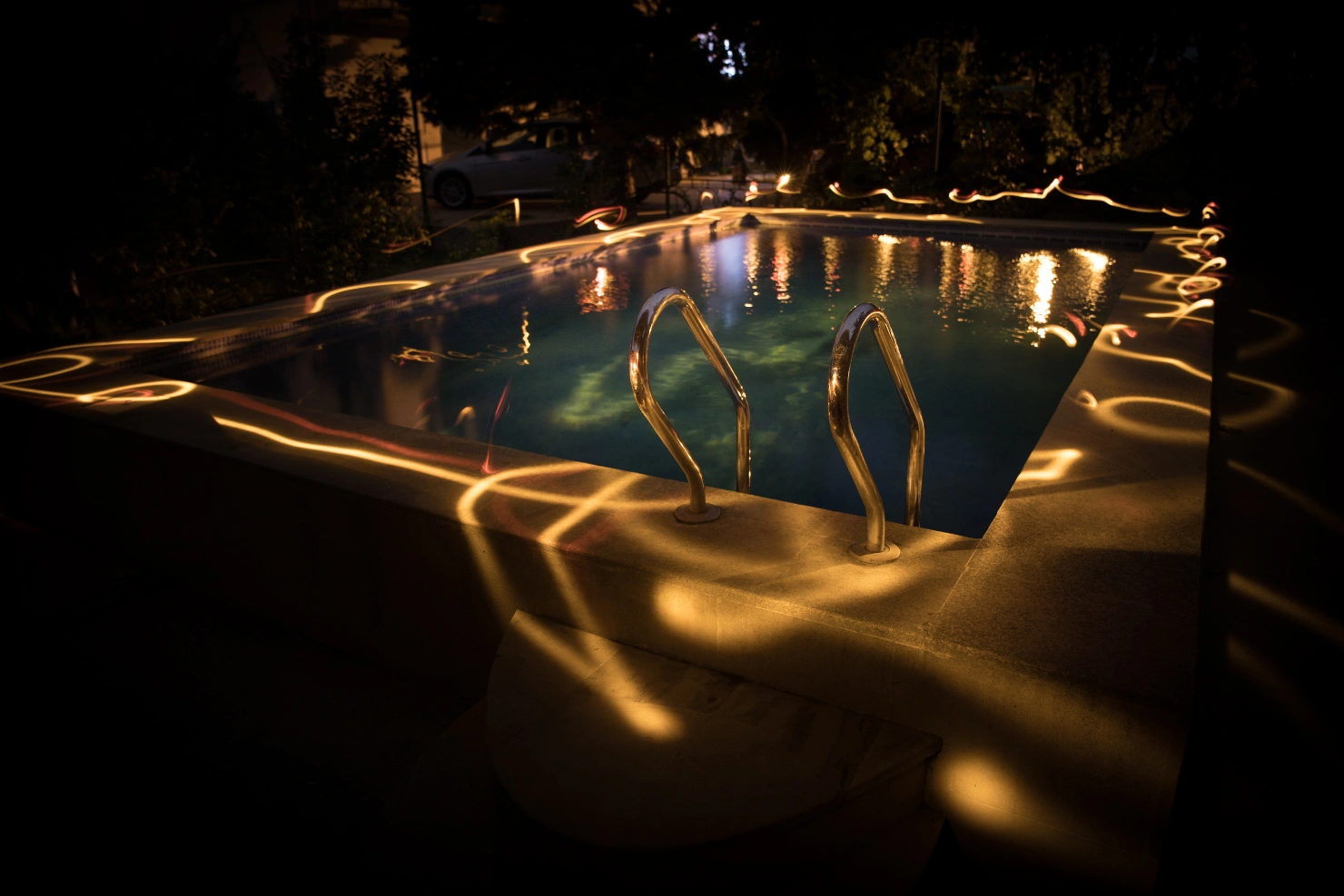
LED technology can reduce the electricity required for pool lighting compared with similar incandescent fixtures. The exact savings depend on fixture wattage, the number of lights, operating hours, and local electricity rates.
Smart controls can also reduce unnecessary operation by placing lights on schedules. Useful control features may include:
- Automatic evening start times
- Programmed shutoff times
- Separate pool and spa lighting zones
- Adjustable colour and brightness settings
- One-touch scenes for entertaining
- Integration with compatible water features
- Remote confirmation that lights are off
Longer LED operating life may also reduce how often a fixture or lighting component requires attention. However, an LED light can still fail early if water reaches the housing, the voltage is incorrect, or the fixture is incompatible with the existing system.
Pro Tip: Do not select a replacement pool light based only on colour, brightness, or price. The new fixture must match the pool’s niche, voltage, transformer, conduit arrangement, cord length, and control system.
Signs An Older Light Needs Service
A pool light does not need to be completely dark before it requires attention. Flickering, moisture, intermittent operation, and breaker trips can all indicate a developing problem.
Common warning signs include:
- The light flickers or dims unexpectedly
- Water or condensation appears behind the lens
- The breaker or GFCI trips when lighting starts
- The lens, face ring, or housing is damaged
- Corrosion is visible around the fixture
- Colours no longer synchronise correctly
- The light works only intermittently
- The fixture repeatedly requires new gaskets or lamps
Any light associated with a breaker trip should remain off until the cause has been inspected. The U.S. Consumer Product Safety Commission warns that wet conditions increase electrical hazards and emphasises GFCI protection for pool-related electrical systems.
Repeatedly resetting a breaker is not a repair. A trip may point to moisture inside the housing, damaged wiring, a failed fixture, an insulation fault, or another electrical problem that requires proper diagnosis.
When Pool Light Repair Makes Sense
Not every pool lighting problem requires a complete replacement. Repair may remain practical when the fixture body, cord, niche, and electrical system are in safe condition.
Failed Lamp
Some traditional fixtures contain a replaceable lamp. When the housing remains dry and undamaged, replacing the lamp and installing the correct gasket may restore operation.
The fixture should still be inspected for moisture and corrosion. Installing a new lamp inside a compromised housing will not correct a failed seal.
Damaged Gasket
A worn, pinched, or improperly seated gasket can allow water to enter the fixture. Gasket replacement may be appropriate when the lens, housing, cord, and electrical components have not been damaged.
The correct gasket must be used for the fixture model. A similar-looking seal may not create the compression needed to keep the housing watertight.
Control Problems
The underwater fixture is not always the source of the problem. Faulty switches, controllers, transformers, relays, or automation settings can also cause unreliable lighting.
A system-wide inspection helps avoid replacing a fixture when the actual failure is located elsewhere.
When Replacement Is The Better Choice
Replacement is often more practical when a fixture has extensive corrosion, recurring water intrusion, damaged wiring, unavailable parts, or repeated failures. It may also make sense when the owner wants modern controls that the existing light cannot support.
Water Intrusion
Visible water inside the lens or housing requires immediate attention. Moisture can damage the lamp socket, LED components, wiring connections, and internal metal parts.
A new gasket may not be enough when corrosion has already developed. The fixture and the surrounding installation should be assessed before it returns to service.
Fixture Corrosion
Corrosion can weaken components and make a dependable seal harder to achieve. It may also indicate that the fixture has experienced long-term moisture exposure.
Replacing a badly corroded light is usually more reliable than repeatedly rebuilding the same ageing housing.
Repeated Breaker Trips
A breaker or GFCI that trips when the light turns on is responding to an electrical problem. The circuit should not be placed back into regular use until the fault has been located.
Underwater lighting involves electrical equipment in a wet environment. Diagnosis and repair should be handled by qualified professionals familiar with applicable pool-lighting requirements.
Outdated Technology
An older fixture may still operate but provide limited brightness, high energy use, or no colour-control options. Replacement can provide a practical improvement when the new fixture is compatible with the existing niche and electrical system.
Manufacturer listings can restrict which lights are approved for particular niches. For example, some Pentair fixtures are specifically listed for use only with named Pentair, Purex, or PacFab niches, showing why brand and niche compatibility must be checked rather than assumed.
Planning A Smart Lighting Upgrade
A successful upgrade begins with an inspection of the existing system. The fixture, niche, cord, conduit, transformer, controls, and electrical protection all affect the available replacement options.
A professional planning process should include:
- Confirming the existing fixture model and voltage
- Inspecting the niche for damage or corrosion
- Checking the cord and conduit arrangement
- Verifying transformer capacity and compatibility
- Reviewing the GFCI and electrical controls
- Selecting white or colour-changing fixtures
- Checking automation-system compatibility
- Planning beam direction and fixture placement
- Testing every light and control function
Some smart lights can pair with central pool automation, while others require a dedicated controller. Manufacturer information should be reviewed before equipment is purchased because compatible control options vary by product.
Smart Lighting For Commercial Pools
Commercial pools at hotels, apartment communities, fitness centres, clubs, and other shared properties may also benefit from LED fixtures and centralised controls. Reliable lighting supports consistent operation during approved evening hours.
Programmable schedules can help staff turn lighting on and off at established times. Central controls may also make it easier to manage separate pools, spas, water features, or lighting zones from one location.
Commercial facilities must consider operating policies, inspection requirements, swimmer visibility, electrical safety, and equipment access. A decorative lighting scene should never interfere with the level of visibility required for safe facility operation.
Bring Smarter Lighting To Your Pool
Smart pool lighting can make evening swimming more convenient, visually appealing, and energy efficient. The best results come from choosing fixtures that fit the pool’s structure, electrical system, control equipment, and intended use.
HQ Pool Services repairs and replaces pool lights for residential and commercial pools across Maryland, Washington, DC, and Northern Virginia. We inspect fixtures, niches, seals, wiring conditions, and compatible replacement options before recommending the right solution.
Contact HQ Pool Services to request a quote and restore dependable lighting throughout your pool area.