How To Maintain Crystal-Clear Pool Water Without Guessing
Crystal-clear pool water should not feel like a guessing game every time you test, treat, and wait to see what happens. Many homeowners add chemicals based on cloudy water, algae spots, or low chlorine readings, only to find that the problem keeps coming back a few days later.
“So how do you maintain clean, balanced pool water without constantly guessing what your pool needs?”
It starts with understanding that water clarity depends on more than chlorine alone. Proper pH, alkalinity, calcium hardness, stabilizer, circulation, and consistent testing all work together to keep your pool safe, comfortable, and easier to enjoy.
Key Takeaways
- Balanced chemistry keeps pool water consistently clear.
- Testing prevents costly pool chemical mistakes.
- Circulation helps chemicals work more effectively.
- Seasonal changes affect pool water balance.
- Professional service removes chemical treatment guesswork.
Why Clear Pool Water Starts With Balance
Clear water is not just about how the pool looks. It is usually a sign that the water chemistry, circulation, filtration, and cleaning routine are working together properly.
Pool water can look fine for a short time even when the chemistry is slowly drifting out of range. That is why guessing can be frustrating. A pool may need more than chlorine, or it may need pH, alkalinity, calcium hardness, or stabilizer adjusted first.
Balanced pool water helps:
- Keep sanitizer working properly
- Reduce algae and cloudy water problems
- Protect pool surfaces from scaling or corrosion
- Make the water more comfortable for swimmers
- Support better long-term equipment performance
When each part of the water chemistry is in range, the pool becomes easier to maintain and less likely to swing from clear to cloudy without warning.
Why Guessing With Pool Chemicals Creates More Problems
Adding chemicals without knowing the actual water levels can lead to overcorrection. That means one problem may temporarily improve while another begins.
For example, adding more chlorine may not solve cloudy water if the pH is too high, the filter is dirty, or the stabilizer level is affecting chlorine performance. Adding acid without checking alkalinity can also make the water unstable. The result is often a cycle of treating, testing, and treating again.
Common problems caused by guessing include:
- Too much chlorine, which can make water harsh
- Low pH, which can be corrosive to equipment and surfaces
- High pH, which can reduce sanitizer effectiveness
- Low alkalinity, which can cause pH to bounce
- High calcium hardness, which can contribute to scale
- Low stabilizer, which can allow sunlight to burn off chlorine faster
- Excess stabilizer, which can make chlorine less effective
The goal is not to add more chemicals. The goal is to add the right chemicals, in the right amount, in the right order.
The Main Water Chemistry Levels Homeowners Should Know
Pool water balance depends on several chemistry levels working together. You do not need to be a chemist, but it helps to understand what each level does.
Sanitizer Levels
Sanitizer, usually chlorine, helps control bacteria, algae, and organic contaminants in the water. If sanitizer levels are too low, algae and cloudy water can develop quickly, especially during hot weather or heavy pool use.
If levels are too high, the water may feel uncomfortable. A strong chlorine smell can also indicate that the water has contaminants or combined chlorine present, not always that there is too much usable chlorine.
pH Balance
pH measures how acidic or basic the water is. Pool water that is too low in pH can become corrosive and irritating. Water that is too high in pH can become cloudy and reduce how well chlorine works.
The ideal pH range for most pools is commonly kept around 7.2 to 7.8. This range supports swimmer comfort and helps sanitizer perform properly.
Total Alkalinity
Total alkalinity helps stabilize pH. When alkalinity is too low, pH can swing up and down more easily. When alkalinity is too high, pH may be difficult to adjust and can stay elevated.
Balanced alkalinity makes the entire pool easier to manage because pH changes become more predictable.
Calcium Hardness
Calcium hardness measures the amount of dissolved calcium in the water. Low calcium can be aggressive to plaster and other pool surfaces. High calcium can contribute to scale on tile, surfaces, heaters, and equipment.
This level is especially important for plaster, concrete, and gunite pools, but it can affect other pool types as well.
Stabilizer Levels
Stabilizer, also known as cyanuric acid, helps protect chlorine from being broken down by sunlight. Outdoor pools need proper stabilizer levels so chlorine can last longer during sunny conditions.
However, too much stabilizer can reduce chlorine effectiveness. That is why stabilizer should be tested and managed carefully instead of added automatically.
Common Signs Your Pool Water Is Out Of Balance
Pool water often gives warning signs before the problem becomes severe. Recognizing these signs early can help prevent bigger issues.
Some signs are easy to see, while others show up through testing. Even clear-looking water can be out of balance if the chemistry is moving in the wrong direction.
Watch for:
- Cloudy, dull, or hazy water
- Algae on walls, steps, corners, or around ladders
- Chlorine that disappears quickly
- Strong chlorine odor
- Burning eyes or skin irritation
- White scale around tile or water features
- Stains on pool surfaces
- Rough-feeling plaster
- Water that looks clear but tests poorly
These signs do not always have one simple cause. Cloudy water, for example, may come from poor filtration, high pH, low sanitizer, algae growth, heavy debris, or a combination of issues.
How Testing Removes The Guesswork
Testing is the starting point for proper pool care. Without accurate testing, it is difficult to know what the water actually needs.
Basic test strips can help homeowners monitor common levels between service visits. Liquid test kits can provide more detail when used correctly. Professional pool testing can give a clearer picture when the water keeps slipping out of range or when multiple levels need adjustment.
Testing should check more than chlorine. A complete water check usually includes:
- Free chlorine or sanitizer
- pH
- Total alkalinity
- Calcium hardness
- Cyanuric acid or stabilizer
- Total chlorine, when needed
- Phosphates or metals, when problems keep returning
The more complete the test, the easier it is to avoid unnecessary chemical use.
Pool Chemical Treatment: What Should Happen First
Proper chemical treatment follows a process. Randomly adding products can create reactions, waste chemicals, or leave the water unstable.
Before adding anything, the water should be tested and the pool conditions should be reviewed. Pool size, water volume, surface type, recent weather, bather load, and circulation all affect treatment decisions.
A careful treatment process usually includes:
- Testing current water chemistry
- Reviewing pool size and condition
- Checking sanitizer, pH, alkalinity, calcium hardness, and stabilizer
- Adding chemicals in proper sequence
- Measuring chemical amounts based on actual water volume
- Brushing and circulating the pool
- Monitoring how the water responds
- Retesting when needed
At HQ Pool, the focus is on stable balance, not quick corrections that create new issues later.
How Circulation And Filtration Affect Water Clarity
Chemicals cannot do their job well if water is not moving and filtering properly. Even balanced water can become cloudy if circulation is weak or the filter is dirty.
Good circulation helps distribute chemicals evenly and prevents stagnant areas where algae can start. Filtration removes small particles, debris, and contaminants that affect water clarity.
Pump Run Time
Pools usually need longer circulation during hot weather, heavy use, or after chemical treatment. If the pump is not running long enough, chemicals may not distribute evenly, and debris may remain suspended in the water.
Filter Condition
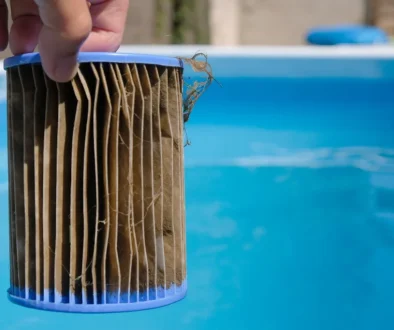
A clogged or dirty filter can make water look dull or cloudy. Sand, cartridge, and DE filters all need proper cleaning and maintenance. If the filter is overdue for service, chemical treatment alone may not solve the issue.
Brushing And Skimming
Brushing walls, steps, benches, and corners helps loosen algae and debris before they become bigger problems. Skimming leaves and surface debris also reduces the organic load on the pool, helping sanitizer work more efficiently.
Seasonal Factors That Change Pool Chemistry
Pool water does not stay the same all year. Weather, temperature, sunlight, debris, and usage can all change how quickly your pool chemistry shifts.
This is why a pool may need different attention in spring, summer, and fall. The same chemical routine may not work during every part of the season.
| Seasonal Factor | How It Affects Pool Water | What Homeowners Should Watch |
|---|---|---|
| Hot Weather | Chlorine breaks down faster, especially in sunny outdoor pools | Low sanitizer readings and cloudy water |
| Heavy Rain | Rain can dilute chemicals and affect pH and alkalinity | Water level changes, cloudiness, unstable test results |
| High Bather Load | Sweat, sunscreen, oils, and debris increase chlorine demand | Chlorine dropping faster than usual |
| Falling Leaves | Organic debris adds contaminants and can stain surfaces | Algae growth, stains, clogged baskets |
| Poor Circulation | Water may not move evenly through all areas of the pool | Algae in corners, steps, or dead spots |
| Fresh Water Added | Refilling can change calcium hardness, pH, and alkalinity | Chemistry shifts after topping off the pool |
When DIY Pool Care Is Not Enough
Many homeowners can handle light maintenance, but recurring water problems often need a more complete diagnosis. If the same issue keeps returning, the problem may not be the chemical you keep adding.
DIY care becomes difficult when multiple levels are out of range at the same time. For example, cloudy water may involve sanitizer, pH, alkalinity, filtration, and circulation. Treating just one part may not fix the cause.
It may be time to schedule professional pool chemical treatment if:
- Cloudiness keeps returning
- Algae comes back after treatment
- Chlorine does not hold
- pH or alkalinity will not stabilize
- Water feels harsh or irritating
- Scale or staining begins to appear
- The pool has recently opened for the season
- Heavy rain or heavy use changed the water quickly
A professional service can test the full chemistry picture and correct the water in a controlled way.
How Professional Water Balancing Helps Keep Pools Stable
Professional water balancing helps homeowners avoid the frustration of trial and error. Instead of reacting to symptoms, the service looks at the full condition of the water.
HQ Pool provides pool chemical treatment and water balancing for homeowners across DC, Maryland, and Northern Virginia. The service is designed to help keep water clear, comfortable, and properly balanced through accurate testing and measured treatment.
Professional balancing can help:
- Identify the actual cause of cloudy or unstable water
- Reduce unnecessary chemical use
- Protect pool equipment and surfaces
- Improve swimmer comfort
- Prevent small problems from becoming costly issues
- Keep water more consistent through seasonal changes
This is especially helpful for homeowners who do not want to spend the season testing, guessing, and correcting the same problems repeatedly.
Pro Tip: Never add multiple pool chemicals at the same time or mix chemicals directly together. Add products separately, follow label directions, allow proper circulation, and retest when needed. This helps prevent unsafe reactions and reduces the chance of overcorrecting the water.
Simple Habits That Help Keep Pool Water Clear
Good daily and weekly habits make professional chemical treatment more effective. Clear water is easier to maintain when debris, circulation, and filtration are under control.
Homeowners can support better water balance by staying consistent with simple maintenance tasks.
Helpful habits include:
- Remove leaves and debris often
- Empty skimmer and pump baskets
- Run the pump consistently
- Brush walls, steps, and corners
- Keep the filter clean
- Test water regularly
- Watch for cloudy water early
- Schedule routine chemical balancing
- Avoid adding random chemicals without testing first
Small steps can make a major difference, especially during hot weather or after storms.
Final Thoughts On Crystal-Clear Pool Water
Crystal-clear pool water does not come from guessing. It comes from testing, balancing, circulation, filtration, and consistent care.
When sanitizer, pH, alkalinity, calcium hardness, and stabilizer are managed properly, the pool becomes easier to enjoy and less stressful to maintain. Instead of reacting every time the water turns cloudy or algae appears, homeowners can stay ahead of problems with a smarter treatment plan.
For homeowners across DC, Maryland, and Northern Virginia, HQ Pool provides professional pool chemical treatment and water balancing designed to keep your water clear, stable, and swim-ready. Schedule service with HQ Pool and enjoy your backyard without the chemical guesswork.